
Tight or tired legs can make simple movements feel harder than they should. If you’ve been searching for quad and hamstring stretches, hamstring and quad stretches, or stretches for quads and hamstrings, you’re not alone. The right quad and hamstring exercises can help support stronger, more flexible quads and hamstrings.
In this guide, you’ll find simple quad and hamstring exercises that can fit into your regular routine. We’ll cover easy movements, helpful tips, and ways to work both muscle groups safely and effectively.
Quick Summary
- Tight quads and hamstrings disrupt posture, joint stability, and overall movement, not just flexibility.
- The hamstring-to-quadriceps (H:Q) strength ratio is a key indicator of knee health and injury risk.
- Effective quad stretches (like the Couch Stretch) must combine hip extension with knee flexion for full results.
- Effective hamstring stretches (like the Supine Strap Stretch) require a neutral spine, not maximum reach.
- Static stretching is best done post-workout; dynamic stretching is better suited for warm-ups.
- Strength training through a full range of motion builds more lasting flexibility than passive stretching alone.
- Consistent, low-impact training methods like Lagree combine mobility and strength in a single session for safer, faster results.
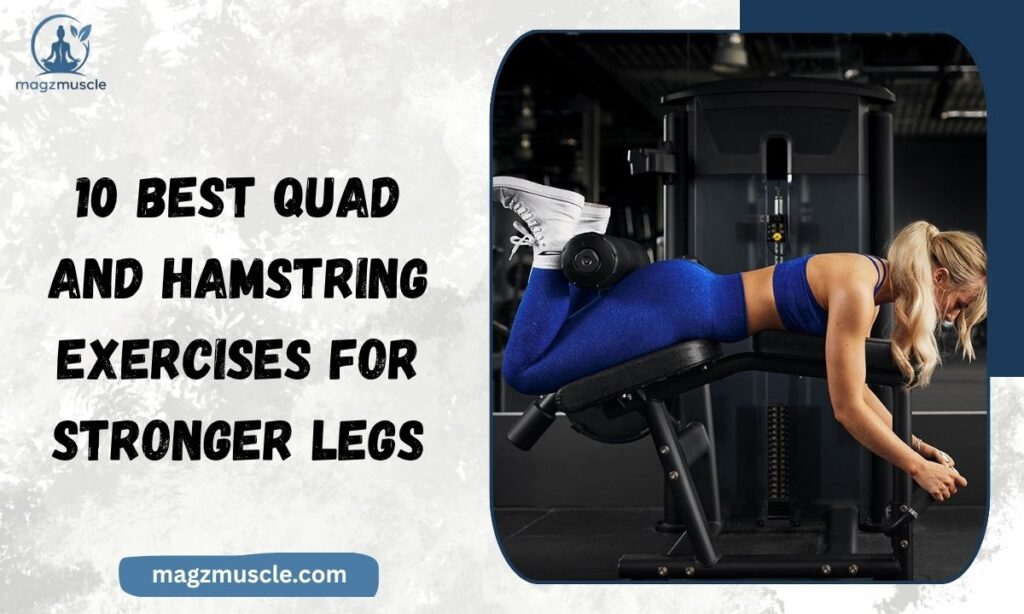
10 Best Quad and Hamstring Exercises
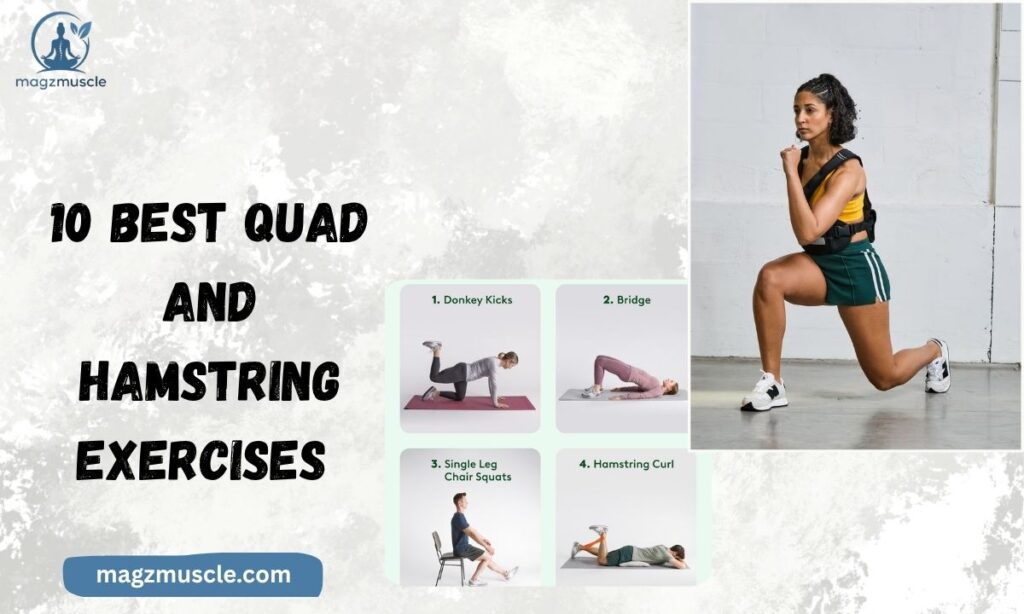
Stretching alone only solves half the tightness equation. Building real strength through a full range of motion is what actually teaches your quads and hamstrings to stay long, stable, and powerful under load, rather than snapping back to a shortened resting state between sessions.
- Back squat: Builds raw quad and glute strength through a deep, loaded range.
- Front squat: Shifts emphasis onto the quads and core with an upright torso.
- Romanian deadlift: Loads the hamstrings through a controlled hip hinge.
- Bulgarian split squat: Trains single-leg quad strength and hip stability.
- Walking lunge: Builds dynamic strength and balance across both legs.
- Single-leg deadlift: Improves hamstring strength and balance together.
- Hack squat: Isolates the quads with reduced lower back strain.
- Nordic hamstring curl: Strengthens the hamstrings eccentrically to prevent strains.
- Step-up: Builds unilateral quad and glute power for real-world movement.
- Glute-ham raise: Targets the hamstrings through both hip and knee flexion.
The exercises below target both muscle groups from different angles, combining compound lifts with single-leg and eccentric-focused movements. Rotating through a mix of these each week helps close the elasticity gap while keeping the hamstring-to-quad strength ratio balanced and injury risk low.
Why Tight Quads and Hamstrings Hold You Back
Most people notice tight legs as a passing inconvenience, a stiff moment getting out of the car or a pulled feeling during a lunge. In reality, chronically shortened quads and hamstrings quietly reshape how your entire body moves. They limit your stride length, reduce how deep you can squat, and force nearby joints to absorb stress they weren’t built to handle.
Postural Alignment and the Seated Body Adaptation
The human body adapts to whatever position it spends the most time in, and for most adults, that position is seated. Hours spent at a desk, in a car, or on a couch keep the hip flexors and quadriceps in a shortened state for extended periods. Muscles that stay short long enough begin to lose sarcomeres, the small contractile units that determine a muscle’s resting length, which means the muscle physically adapts to being tight.
This adaptation doesn’t stay isolated to the thigh. A shortened rectus femoris (one of the four quad muscles) tilts the pelvis forward, which increases the curve in the lower back and changes how the hamstrings are recruited during standing and walking.
The Elasticity Gap: Strength vs. Functional Mobility
It’s entirely possible to have strong quads and hamstrings that are also functionally stiff. Strength measures how much force a muscle can produce, while mobility measures how far a joint can move through a controlled, usable range.
| Quality | What It Measures | Built By |
| Strength | Force output within a fixed range | Resistance training (e.g., leg press) |
| Functional Mobility | Usable range under control | Full-range, end-range loaded movement |
| Elasticity Gap | The mismatch between the two | Skipping mobility work while training strength |
When Opposing Muscles Lose Balance
The quads and hamstrings work as an opposing pair, or antagonist muscle group, on either side of the thigh. When one side becomes significantly tighter or stronger than the other, the joints in between (the hip and the knee) lose some of their natural stability.
A common pattern in people who cycle, run, or sit for long hours is dominant, tight quads paired with comparatively weak and short hamstrings. Over time, this imbalance changes how the knee tracks during bending and straightening, which raises the risk of patellar (kneecap) pain and strain injuries.
The Biomechanics of Power: Why Length Dictates Strength
Muscle physiology follows what’s known as the length-tension relationship. A muscle produces its greatest force when its fibers are at an optimal resting length, not too short and not overstretched. When the quads or hamstrings are chronically shortened, their fibers sit outside that optimal zone, which means they generate less usable force even if the muscle itself is large and well-trained.
This is one of the clearest, most practical reasons strength athletes and coaches take stretching seriously. A muscle with better length isn’t just safer; it’s also capable of producing more power at the joint angles that matter most in sport and daily movement.
Why Strength Needs Length for Safety
Explosive movements like sprinting, jumping, and change-of-direction sports ask the hamstrings in particular to decelerate the lower leg at high speed. This eccentric demand (the muscle lengthening while under tension) is where most hamstring strains occur. A hamstring that has adequate resting length and has been trained through a full range of motion is far better equipped to absorb that load without tearing.
The Science of Stretching Under Tension
Traditional static stretching lengthens a muscle passively, but research on training methods has shown that stretching a muscle while it’s under load, sometimes called loaded stretching or eccentric lengthening, produces more durable changes in muscle length and tissue resilience. This is part of why strength coaches increasingly favor movements that combine controlled lengthening with muscular tension rather than relying on passive holds alone.
The Agonist-Antagonist Relationship: The Reciprocal Dance of the Legs
Every time your quads contract to straighten your knee, your hamstrings are asked to relax and lengthen, and vice versa. This coordinated give-and-take is called reciprocal inhibition. It’s an automatic nervous system response, and it’s the reason a tight hamstring can make it harder for your quad to fire efficiently, and why a locked-up quad can inhibit smooth hamstring activation. Healthy movement depends on both muscle groups being free enough to lengthen on cue.
What Your Quads and Hamstrings Do Together
The quadriceps and hamstrings rarely work in isolation. Nearly every functional movement, from walking to squatting to sprinting, relies on both groups coordinating across two joints at once.
Biomechanics of the Knee and Hip
The quadriceps span the front of the thigh and cross both the hip and the knee (with the exception of three of the four heads, which cross only the knee). The hamstrings span the back of the thigh and also cross both joints. Because of this shared architecture, tightness or weakness in one group directly affects how the other joint moves, which is why hip mobility problems so often show up as knee pain, and knee instability often traces back to the hip.
Joint Integrity and the ACL: The Protective Role of Muscle Balance
The hamstrings act as a natural brake for the knee, helping to control excessive forward movement of the shin bone that can strain the anterior cruciate ligament (ACL). When the hamstrings are weak or inflexible relative to the quads, the knee loses some of that natural protection, particularly during high-speed deceleration or sudden direction changes, which are common mechanisms behind ACL injuries in field and court sports.
Why Strength Ratios Matter More Than You Think
Coaches and physical therapists commonly assess the hamstring-to-quadriceps (H:Q) strength ratio as a marker of knee health. A ratio that’s too low, meaning the hamstrings are significantly weaker than the quads, has been associated with a higher likelihood of knee injuries in athletic populations, especially in sports involving cutting and jumping. Balanced training that strengthens and stretches both muscle groups helps keep this ratio in a healthier range.
How Leg Tightness Causes Foot and Back Pain
Tight quads pull the pelvis into an anterior (forward) tilt, which increases lumbar curve and can contribute to lower back discomfort. Tight hamstrings, on the other hand, can flatten the natural curve of the lower back during forward bending and alter how weight is distributed through the feet, sometimes contributing to arch pain or altered gait patterns.
How Short Muscles Cap Your Performance
A muscle that can’t lengthen fully can’t contract through its full range either. Short quads limit how deep you can squat or lunge, and short hamstrings limit stride length and hip hinge depth in deadlifts. Both caps translate directly into missed strength and power potential.
How Coordinated Movement Actually Happens
Efficient movement depends on the nervous system smoothly switching which muscle is contracting and which is lengthening, dozens of times per stride or per rep. When either the quads or hamstrings are chronically tight, this handoff becomes less efficient, and the body starts recruiting other muscles (often the lower back or calves) to compensate.
Training the Body to Lengthen and Strengthen Simultaneously
The most effective long-term approach isn’t choosing between stretching and strengthening; it’s training the muscle to be strong at its lengthened end range. This is why controlled, slow-tempo strength work that takes a joint through a deep range of motion tends to build more durable flexibility than static stretching alone.
Reciprocal Inhibition and Technical Precision: Stretching Without Compensation
Because tight hip flexors and quads can inhibit glute and hamstring activation, stretching the front of the thigh before hamstring-dominant work (like deadlifts or hip thrusts) can improve technique and muscle recruitment. Precision matters here: a stretch performed with poor form can simply teach the body a new compensation pattern rather than resolving the original tightness.
Related Reading
- How the hip flexors influence lower back pain
- Understanding muscle imbalances in runners and cyclists
- The role of the glutes in hip and knee stability
The Most Effective Quad Stretches (Without Overstraining Your Knees)

The quadriceps are a group of four muscles: the rectus femoris, vastus medialis, vastus intermedius, and vastus lateralis. Because the rectus femoris crosses both the hip and knee, stretching it effectively requires extending the hip while bending the knee at the same time, which is why many basic quad stretches fall short.
Specific vs. Integrated Mobility: Target the Muscle, Save the Joint
Not every quad stretch is created equal. Some place unnecessary shear force on the knee joint by pulling the ankle aggressively toward the glutes without stabilizing the hip. The most effective stretches isolate the muscle’s actual length while minimizing compressive stress on the knee itself.
Standing Quad Stretch
This is the most familiar quad stretch, and it’s effective when done with attention to hip position.
How to perform it:
- Stand tall and hold onto a wall or chair for balance if needed.
- Bend your right knee and grab your right ankle or foot behind you.
- Gently pull your heel toward your glutes while keeping your knees close together.
- Tuck your pelvis slightly and push your hip forward to deepen the stretch through the front of the thigh.
- Hold for 20 to 30 seconds, then switch sides.
Biarticular Muscles: The Dual-Joint Impact of the Rectus Femoris
Because the rectus femoris crosses the hip, simply bending the knee only stretches part of the muscle. Adding hip extension (pushing the hip forward while pulling the heel back) is what actually lengthens the rectus femoris fully, making this small adjustment the difference between a mediocre stretch and an effective one.
Couch Stretch
The couch stretch is a favorite among strength coaches because it combines hip extension with knee flexion in a way that’s difficult to achieve standing.
How to perform it:
- Kneel in front of a couch or elevated surface with your back knee bent and your shin resting against it.
- Place your back foot’s toes against the couch, with the top of your foot flat.
- Bring your front foot forward into a lunge position, keeping your torso upright.
- Squeeze your glute on the back leg side to deepen the hip extension.
- Hold for 30 to 45 seconds per side, breathing steadily throughout.
Why Stretching Your Quads Saves Your Hamstrings
Because tight hip flexors and quads pull the pelvis forward, they can leave the hamstrings in a shortened, overworked position even when the hamstrings themselves feel fine. Addressing quad and hip flexor tightness first often relieves hamstring tension that stretching the hamstrings alone never fully resolves.
Restoring Hip Extension
Many people lose hip extension range without realizing it because modern life rarely asks the hip to move backward. The couch stretch directly restores that missing range, which supports a longer, more powerful stride whether you’re walking, running, or sprinting.
Side-Lying Quad Stretch
This variation removes the balance demand of the standing stretch, making it useful for beginners or anyone with balance concerns.
How to perform it:
- Lie on your left side with your legs stacked.
- Bend your right knee and reach back to hold your right ankle.
- Gently draw your heel toward your glutes while keeping your hips stacked and your pelvis tucked slightly.
- Hold for 20 to 30 seconds, then switch sides.
Using Floor-Based Stretches for Neural Relaxation
Floor-based stretches reduce the amount of stabilization work the nervous system has to do, which allows the muscle being stretched to relax more fully. This makes side-lying and other supported positions especially useful for people who feel like they “can’t relax into” standing stretches.
Dynamic Quad Stretch
Dynamic stretches are best used before training, when you want to prepare the muscle for activity rather than lengthen it passively.
How to perform it:
- Stand tall and walk forward slowly.
- With each step, kick your heel up toward your glutes and grab your ankle briefly.
- Hold for a second, release, and continue walking.
- Repeat for 10 to 15 steps per leg.
Rehearsing Movement to Wake Up the Nervous System
Dynamic stretching primes the nervous system for the movement patterns about to be trained, improving coordination and reducing the “cold muscle” feeling that increases injury risk at the start of a workout.
The Science of Eccentric Training: Building Length Under Load
Research on eccentric (lengthening) muscle contractions shows that training a muscle while it lengthens under load can increase functional range of motion more effectively than static stretching alone, because the muscle adapts to being strong at that longer length rather than simply being pulled there passively.
When to Stretch, and When to Strengthen
If your goal is pre-workout preparation, dynamic stretches are the better choice. If your goal is long-term range of motion improvement, static holds combined with strength training at end ranges tend to produce more lasting results.
The Critical Union of Strength and Range
Flexibility without strength at that new range is fragile and tends to regress. Pairing a stretch like the couch stretch with strength work that uses a deep range, such as reverse lunges or Bulgarian split squats, helps lock in the mobility gains.
Why the Hamstrings are the Quad’s Best Protector
A strong, flexible hamstring group helps decelerate the lower leg during activities like running and jumping, taking pressure off the knee that would otherwise fall on the quadriceps and patellar tendon. Quad flexibility and hamstring strength work together to protect the knee joint as a whole.
The Best Hamstring Stretches for Flexibility and Power
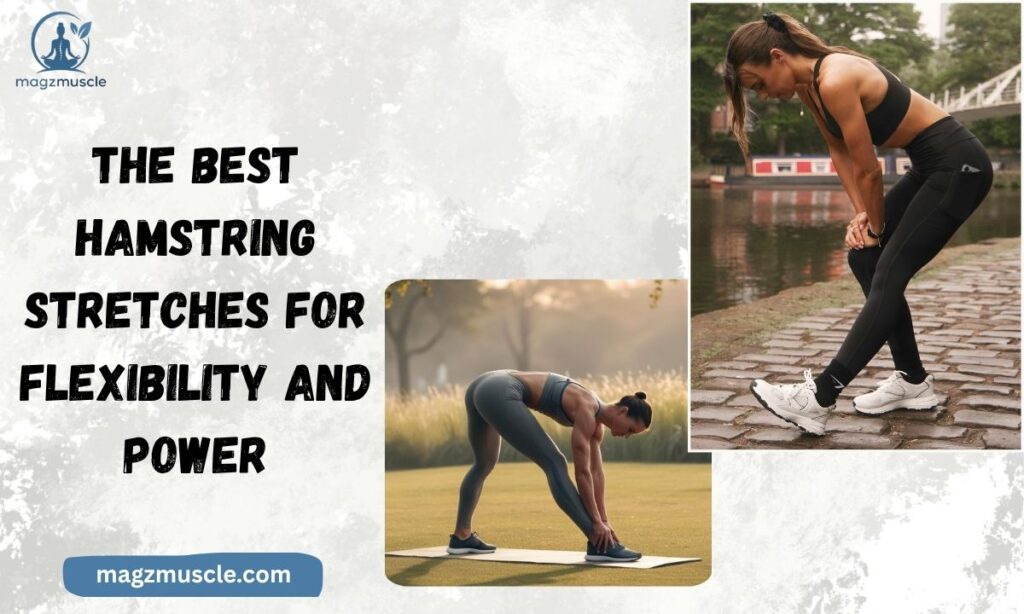
The hamstrings are made up of three muscles: the biceps femoris, semitendinosus, and semimembranosus. They cross both the hip and the knee, which means effective stretches need to combine hip flexion with knee extension.
Isolating the Hamstring vs. Integrating the Chain
Some hamstring stretches isolate the muscle directly, while others integrate the entire posterior chain, including the calves and lower back. Both have their place, but isolating the hamstring first can help you identify whether tightness is coming from the muscle itself or from surrounding structures like the sciatic nerve or lower back fascia.
Seated Forward Fold
A classic stretch that’s easy to modify for different flexibility levels.
How to perform it:
- Sit on the floor with your legs extended straight in front of you.
- Flex your feet so your toes point toward the ceiling.
- Hinge forward from your hips, keeping your spine long rather than rounding your back.
- Reach toward your shins or feet until you feel a stretch through the back of your thighs.
- Hold for 30 seconds, breathing slowly.
Why Spinal Alignment Dictates Hamstring Health
If you round your lower back to reach further in a forward fold, you shift the stretch away from the hamstrings and onto the lumbar spine, which can aggravate lower back issues rather than improve flexibility. Keeping the spine neutral is more important than how far you can reach.
Dissociating Spinal Movement from Hamstring Length
Learning to hinge from the hip joint rather than the lower back is a skill in itself. Practicing this dissociation improves not just hamstring flexibility but also protects the spine during everyday bending and lifting movements.
Standing Forward Hinge
This standing variation adds a light loading component that some people find more effective than the seated version.
How to perform it:
- Stand with your feet hip-width apart and a slight bend in your knees.
- Hinge forward from your hips, letting your arms hang or reach toward the floor.
- Keep your back flat rather than rounded.
- Hold for 20 to 30 seconds, allowing gravity to gently deepen the stretch.
Dissociating the Hip from the Spine
As with the seated fold, the key skill here is hinging purely from the hip while keeping the ribcage stacked over the pelvis, rather than folding through the lower back.
Supine Strap Stretch
Using a strap, towel, or resistance band allows for a controlled, supported hamstring stretch that’s gentle on the lower back.
How to perform it:
- Lie on your back with both legs extended.
- Loop a strap or towel around the ball of your right foot.
- Keeping your knee straight but not locked, raise your leg toward the ceiling until you feel a stretch.
- Keep your left leg flat on the floor or bent with the foot planted for support.
- Hold for 30 seconds, then switch legs.
The Tendon-Muscle Balance: Protecting the Knee from Over-Stretching
Locking the knee completely during this stretch shifts stress onto the tendon and joint capsule rather than the muscle belly. A soft, slightly bent knee keeps the tension where it belongs, in the hamstring muscle itself.
Dynamic Leg Swings
Like the dynamic quad stretch, leg swings prepare the hamstrings for activity rather than lengthening them passively.
How to perform it:
- Stand next to a wall or sturdy object for balance.
- Swing one leg forward and backward in a controlled arc, keeping your core engaged.
- Gradually increase the range as your muscles warm up.
- Perform 10 to 15 swings per leg.
Protecting Your Lower Back During Hamstring Work
Because the hamstrings attach near the base of the pelvis, tight hamstrings can pull the pelvis into a posterior tilt, flattening the lower back’s natural curve. Stretching with attention to spinal position, rather than chasing maximum reach, protects the lower back throughout this process.
Using Props and Breath to Bypass Protective Guarding
Slow, controlled breathing during a stretch signals the nervous system that the body is safe, which can reduce the protective muscle guarding that limits how far a tight hamstring will lengthen. Using a strap or wall for support also reduces the stabilization demand, allowing deeper relaxation into the stretch.
Why Pre-Stretch Movement Bypasses Threat Responses
A few minutes of light movement, like walking or a gentle dynamic warm-up, before static hamstring stretching can reduce the nervous system’s protective resistance, making static holds more effective and comfortable.
Timing Matters More Than Intensity
When you stretch matters as much as how you stretch. Static hamstring stretches are best saved for after training or on separate mobility days, rather than immediately before explosive lower body work.
Why Static Stretching Can Turn Off Your Power
Holding a static stretch for longer than roughly 60 seconds right before explosive activity has been shown in research to temporarily reduce muscular power output, an effect sometimes called stretch-induced strength deficit. This is why many coaches now separate static stretching from the immediate pre-workout warm-up.
Why Stretching Under Load is the Ultimate Performance Hack
Combining controlled lengthening with active muscular tension, such as a slow eccentric Romanian deadlift, builds both flexibility and strength at the same time, without the temporary power reduction associated with long static holds.
How Hamstring Length Fuels Posture and Power
Flexible hamstrings allow the pelvis to move freely during a hip hinge, which supports a longer, more powerful stride in running and a deeper, safer range of motion in deadlifts and squats.
Related Reading
- How to fix anterior pelvic tilt
- Hip hinge technique for beginners
- Understanding sciatic nerve tension versus muscle tightness
How to Combine Stretching With Strength for Faster Results
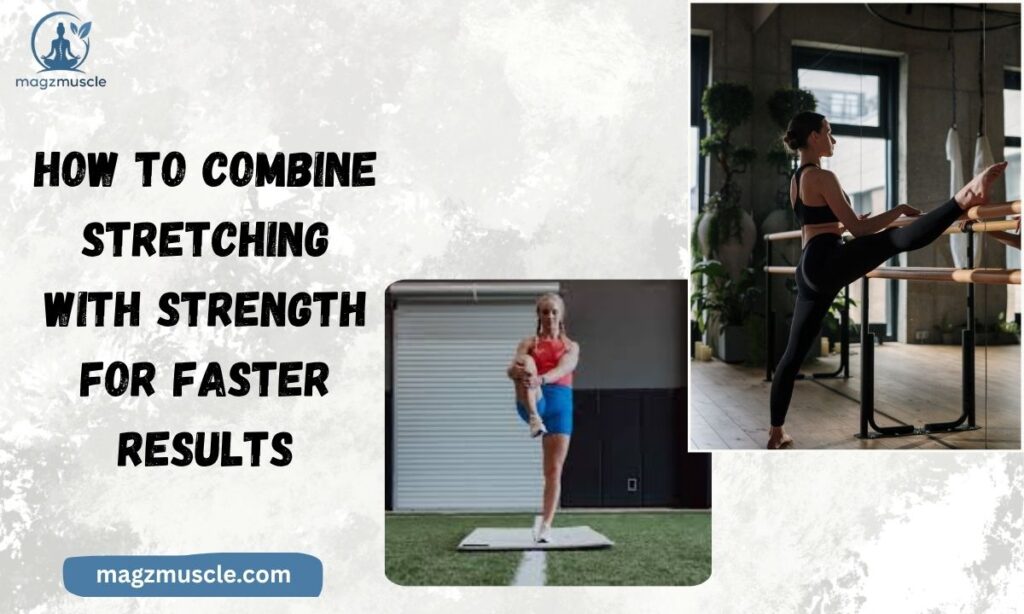
Stretching alone rarely produces lasting change. Pairing mobility work with strength training at end ranges is the most reliable way to build flexibility that actually sticks.
Loading Muscles at Their End Ranges
Training a muscle at the very end of its range, such as a deep Bulgarian split squat or a Romanian deadlift taken to a full hip hinge, teaches the nervous system that this range is safe to use under load. This is often more effective for long-term flexibility than passive stretching alone.
Why Eccentric Loading Physically Lengthens Muscle Fibers
Eccentric training, where a muscle lengthens while under tension, has been shown to promote the addition of sarcomeres in series, which physically increases a muscle’s functional length over time. This is a structural adaptation, not just a temporary nervous system change.
The Mechanical Tension Threshold: Why Your Cells Don’t See Labels
Muscle tissue responds to mechanical tension, not to whether an exercise is labeled a “stretch” or a “strength move.” A slow, deep lunge and a static quad stretch can both create mechanical tension in the same tissue, which is why combining the two approaches tends to outperform either one alone.
Why Control Matters More Than Depth
Chasing maximum range without control teaches the body to brace against a stretch rather than relax into it. Slower, more controlled movement through a comfortable range builds trust with the nervous system, which gradually allows deeper range over time.
Why Your Brain Locks Your Muscles After Stretching
The nervous system limits how far a muscle stretches based partly on perceived safety, not just tissue length. Moving too fast or too far, too soon, can trigger a protective reflex that tightens the muscle further, which is why gradual, patient progress tends to outperform aggressive stretching.
Balancing Opposing Muscle Groups
Because the quads and hamstrings work as an opposing pair, training plans that only address one side create new imbalances even while fixing old ones. A balanced approach strengthens and stretches both muscle groups within the same training week.
Bridging the Gap Between Flexibility and Real-World Function
Flexibility that only shows up on a stretching mat doesn’t automatically transfer to sport or daily life. Functional flexibility training, where mobility work is paired with strength and movement patterns similar to real activities, closes this gap.
Solving the Scheduling Friction of Modern Fitness
Many people struggle to fit separate stretching sessions into an already busy training schedule. Training methods that build mobility and strength within the same session solve this practical problem rather than adding another item to an already long to-do list.
Frequency Over Duration
Research on stretching consistently points to frequency mattering more than the length of any single session. Stretching for a few minutes most days of the week produces better long-term results than one long stretching session once a week.
The Biology of Connective Tissue Remodeling
Tendons and fascia remodel slowly compared to muscle tissue, often over a period of weeks to months of consistent input. This is part of why sustainable flexibility gains require patience and regular practice rather than a single intense stretching session.
Active Versus Passive Flexibility
Passive flexibility is how far a joint can move with outside help, like a strap or a partner. Active flexibility is how far you can move a joint using only your own muscles. Athletic performance depends far more on active flexibility, which is why strength training through a full range of motion is such a valuable tool.
The Bridge Between Static Flexibility and Athletic Power
Static stretching improves passive range, but it’s strength training at end ranges that converts that passive range into usable, athletic flexibility your body can actually call on during a sprint, jump, or lift.
Functional Integration vs. Supplemental Mobility
Some mobility work is best done as a dedicated supplement, like a 10-minute stretching routine after a workout. Other mobility work is best integrated directly into strength training itself, through exercises that naturally take the joint through a deep range under control.
How Lagree Training Helps You Build Strong, Flexible Legs Safely
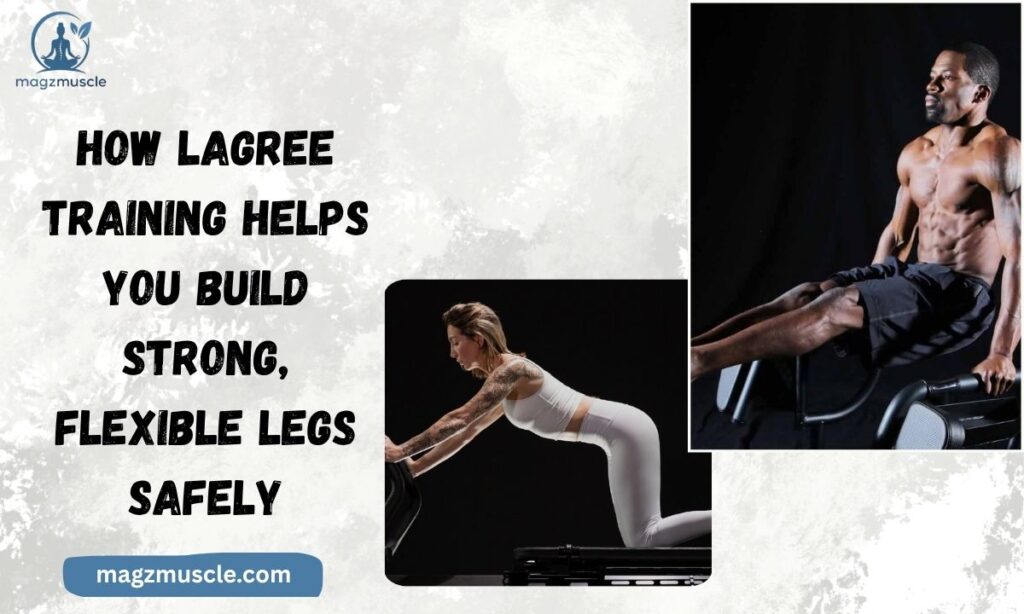
Lagree training is a low-impact, high-intensity method built around slow, controlled movement on a specialized resistance machine. It’s designed to combine strength, stability, and mobility work within a single session, which makes it particularly relevant for anyone trying to address tight quads and hamstrings without adding separate stretching sessions to an already busy week.
The Time Under Tension (TUT) Advantage: Why Slowness Reconstructs the Muscle-Mind Connection
Lagree workouts emphasize slow, deliberate movement rather than fast repetitions. This extended time under tension increases the muscle’s engagement at every point in the range of motion, including the lengthened end ranges that static stretching alone struggles to strengthen.
Low-Impact, High-Intensity (LIHI): The Science of Joint Preservation
Because Lagree movements are performed on a spring-resistance machine rather than through high-impact jumping or running, the joints experience significantly less repetitive impact while the muscles still work at high intensity. This makes it a practical option for people managing knee or lower back sensitivity while still training the quads and hamstrings hard.
Core Stability as the Foundation
Every Lagree exercise is built around maintaining a stable, engaged core. This constant core demand supports the spine during hip-hinge and lunge-style movements, reducing the risk of compensating with the lower back during deep-range leg work.
Why Time Under Tension Changes Everything
Extended time under tension doesn’t just build strength; it also improves a muscle’s ability to control its own lengthening, which is directly relevant to hamstring injury prevention, since most hamstring strains occur during eccentric, high-speed lengthening.
How Spring Resistance Talks to Your Connective Tissue
Spring-based resistance provides continuous tension throughout a movement, unlike gravity-based resistance, which changes throughout a range of motion. This consistent tension is thought to provide more even loading to connective tissue, including tendons and fascia around the quads and hamstrings.
Full-Body Engagement Prevents Compensation
Because Lagree exercises typically demand engagement from multiple muscle groups simultaneously, it becomes harder for the body to compensate by overusing dominant muscles, like relying too heavily on the quads while the hamstrings and glutes stay disengaged.
Metabolic Conditioning via Slow-Tempo Resistance
The slow tempo and high muscular demand of Lagree also produce a significant metabolic conditioning effect, meaning sessions build cardiovascular fitness alongside strength and mobility, without high-impact stress on the joints.
The Environment Shapes Consistency
Consistency is one of the biggest predictors of long-term flexibility and strength gains. A structured class environment, with expert coaching and a set schedule, tends to produce better adherence than a self-directed stretching routine that’s easy to skip.
The Psychology of Self-Efficacy: How Expert Guidance Overcomes the Gym Intimidation Gap
Many people avoid strength training because unfamiliar equipment or crowded gym floors feel intimidating. Guided class formats with expert instruction reduce this barrier, which helps more people actually follow through on the training that would benefit their quads, hamstrings, and joints most.
Why Simultaneous Stimuli Outperform Sequential Training
Training strength, mobility, and core stability at the same time, rather than in separate sequential blocks, tends to be more time-efficient and can produce more integrated, functional results than treating each quality as a separate workout.
Book a Lagree Class in London Today

If tight quads and hamstrings have been holding back your training, your posture, or simply how your legs feel at the end of the day, a structured, low-impact approach that builds strength and mobility together can make a meaningful difference.
BLOOD, SWEAT & TEARS’ Lagree classes in London are designed around exactly this principle, combining controlled, full-range movement with the kind of guided coaching that keeps form safe and results consistent. Book a class and experience training that builds strength and flexibility at the same time.
Neuromuscular Efficiency: Why Fast Results are a Neurological Reset
Many people notice improvements in how their legs feel within just a few sessions of consistent, controlled training. This isn’t necessarily new muscle tissue; it’s often the nervous system relearning how to coordinate the quads and hamstrings more efficiently, a change that can happen faster than most people expect.
Related Reading
- What to expect in your first Lagree class
- How low-impact training protects your joints long term
- Building a weekly routine that balances strength and mobility
Frequently Asked Questions
Is it okay to work quads and hamstrings together?
Yes, training quads and hamstrings together creates balanced leg strength and supports better movement, stability, and overall lower-body function.
Are 4 exercises enough for quads and hamstrings?
Yes, four well-chosen exercises can effectively train both muscle groups when performed with proper form and suitable resistance.
What are signs of weak quads?
Common signs include difficulty climbing stairs, standing from chairs, squatting, maintaining balance, or controlling knee movements during activities.
How to strengthen quadriceps and hamstrings?
Use exercises like squats, lunges, step-ups, leg curls, bridges, and resistance exercises to gradually build strength.
What exercise works both quads and hamstrings?
Squats work both muscle groups, with the quadriceps helping extend the knees and hamstrings supporting hip movement and stability.
What are signs of weak hamstrings?
Signs may include difficulty running, climbing stairs, bending the knee, maintaining stability, or generating strength during lower-body movements.
Conclusion
Strong legs start with simple, consistent movements. Quad and hamstring exercises can help build strength, support balance, and improve everyday movement. Adding quad and hamstring stretches can also help keep your legs flexible. Hamstring and quad stretches are easy to include before or after your routine. Try different stretches for quads and hamstrings to keep both muscle groups moving well.
Make quad and hamstring exercises a regular part of your workout. Focus on slow, controlled movements and good form. Train your quads and hamstrings with exercises that match your fitness level. You do not need a complicated routine. With regular practice, quad and hamstring exercises can support stronger and more active legs. Keep your routine simple, stay consistent, and give your muscles enough time to recover.