
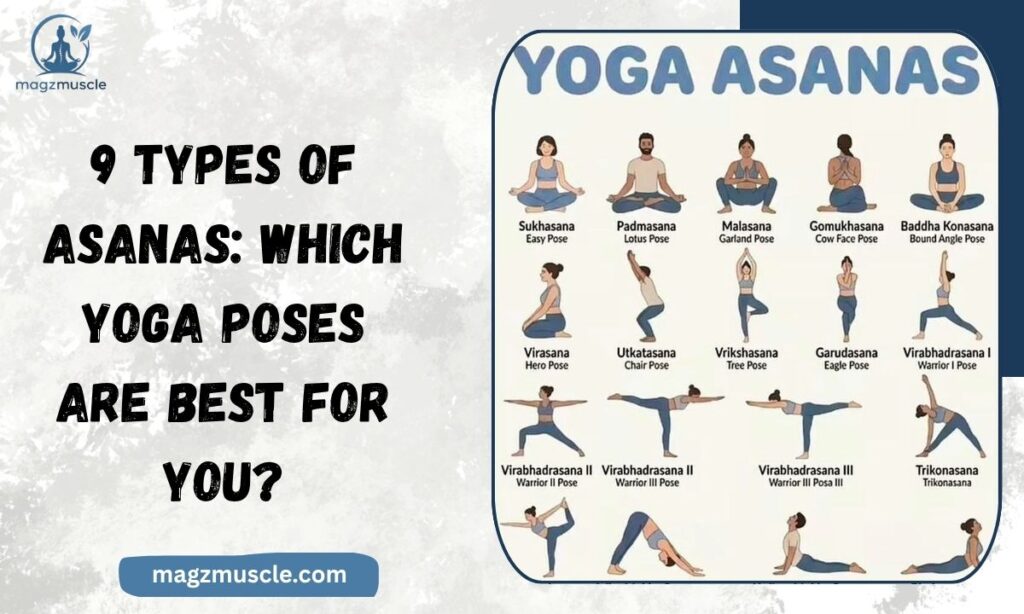

If you feel confused by the many types of asanas, you’re not alone. With so many types of yoga asanas, it can be hard to know which type of yoga asanas is right for your needs. Understanding the different types of asanas in yoga can make your practice feel much simpler and more enjoyable.
In this guide, we’ll explain the main types of asanas in a clear and easy way. You’ll learn about each type of asana, its purpose, and how different poses can support balance, flexibility, strength, and relaxation.
Key Highlights
- Yoga asanas are grouped into categories based on body position: standing, seated, supine, prone, twisting, backbending, inverted, balance, and restorative.
- Each category targets specific muscle groups, joints, or systems in the body, such as the spine, core, or nervous system.
- A well-rounded yoga session usually includes poses from several categories rather than sticking to just one.
- Standing and balance asanas build strength and stability, while restorative and supine poses calm the nervous system.
- Seniors can safely practice modified versions of most asana types with the right precautions and props.
What are the Types of Asana?

An asana is simply a yoga posture, a position the body holds for a period of time. The word comes from Sanskrit and originally referred to a stable, comfortable seat used for meditation. Over centuries, the practice expanded to include hundreds of physical postures, each designed to strengthen, stretch, or balance the body in a different way.
Because there are so many poses, classical and modern yoga teachers grouped them into categories based on:
- The position of the body (standing, sitting, lying down)
- The direction of movement (twisting, bending backward or forward)
- The primary benefit (balance, relaxation, circulation)
This classification isn’t just academic. It’s a practical tool. When you know the type of asana you’re doing, you understand which muscles it works, which systems it stimulates, and how it fits into a complete sequence. A smart yoga session usually touches multiple categories so that no single body part is overworked while others are ignored.
All Types of Yoga Asana
Below are the nine major categories most yoga teachers and traditions recognize today. Together, they cover almost every pose you’ll come across, whether you’re following a beginner routine or an advanced flow.
1. Standing Asanas
Standing poses form the foundation of most yoga sequences. They’re usually held for a short duration, often just a few breaths, and are energizing rather than restful.
Examples: Tadasana (Mountain Pose), Trikonasana (Triangle Pose), Virabhadrasana I and II (Warrior Pose), Vrksasana (Tree Pose)
Benefits:
- Build strength in the legs, hips, and core
- Improve posture and alignment
- Increase stamina and grounding
- Prepare the body for deeper stretches later in the practice
Standing asanas are ideal for warming up the body and are often the first poses taught to beginners because they establish body awareness and balance.
2. Seated Asanas
Seated poses are among the most accessible and commonly practiced asanas. They’re typically slower and more introspective, making them useful for both flexibility work and meditation.
Examples: Sukhasana (Easy Pose), Baddha Konasana (Butterfly Pose), Paschimottanasana (Seated Forward Bend), Padmasana (Lotus Pose)
Benefits:
- Open the hips and stretch the hamstrings
- Calm the mind and support focused breathing
- Improve spinal alignment when done with correct posture
- Serve as a base for pranayama and meditation practice
Because seated asanas don’t demand much balance or strength, they’re a good starting point for absolute beginners and older practitioners alike.
3. Supine Asanas (Lying on Back)
Supine asanas are performed lying face-up. They’re generally used toward the end of a session to help the body wind down after more active poses.
Examples: Shavasana (Corpse Pose), Setu Bandhasana (Bridge Pose), Apanasana (Knees-to-Chest Pose), Supta Padangusthasana (Reclining Hand-to-Big-Toe Pose)
Benefits:
- Release tension in the spine and lower back
- Promote deep relaxation and stress relief
- Aid digestion when combined with gentle twists
- Prepare the nervous system for rest or meditation
Supine poses are especially useful for people dealing with lower back discomfort, since gravity supports the spine rather than compressing it.
4. Prone Asanas (Lying Face-Down)
Prone asanas are done lying on the stomach and are commonly backbends. They activate the muscles along the spine and open up the chest.
Examples: Bhujangasana (Cobra Pose), Shalabhasana (Locust Pose), Dhanurasana (Bow Pose), Makarasana (Crocodile Pose)
Benefits:
- Strengthen the back, shoulders, and glutes
- Improve digestion by stimulating abdominal organs
- Increase lung capacity through chest expansion
- Counteract the effects of prolonged sitting
These asanas are usually practiced mid-session, once the body has warmed up enough to handle the deeper backward stretch safely.
5. Twisting Asanas
Twists rotate the spine along its vertical axis. They’re often described as detoxifying because of how they compress and release internal organs.
Examples: Ardha Matsyendrasana (Half Lord of the Fishes Pose), Bharadvajasana (Seated Twist), Parivritta Trikonasana (Revolved Triangle Pose)
Benefits:
- Improve spinal mobility and flexibility
- Stimulate digestion by massaging the abdominal organs
- Relieve tension stored in the back and shoulders
- Support better posture over time
Twisting poses are typically included between other categories to reset the spine before moving into backbends or forward folds.
6. Backbending Asanas
Backbends open the front of the body, particularly the chest, shoulders, and hip flexors. They tend to be energizing and are often associated with emotional release.
Examples: Ustrasana (Camel Pose), Chakrasana (Wheel Pose), Matsyasana (Fish Pose), Setu Bandhasana (Bridge Pose)
Benefits:
- Strengthen the spine and improve flexibility
- Open the chest and improve breathing capacity
- Counteract the forward hunch caused by desk work
- Stimulate the adrenal glands and boost energy
Because backbends put pressure on the lower back, they should be approached gradually, especially by beginners or anyone with existing spinal issues.
7. Inverted Asanas
Inversions are poses where the heart is positioned higher than the head. They’re considered some of the more advanced asana types, though gentle variations exist for beginners.
Examples: Sarvangasana (Shoulder Stand), Sirsasana (Headstand), Viparita Karani (Legs-Up-the-Wall Pose), Adho Mukha Svanasana (Downward-Facing Dog)
Benefits:
- Improve blood circulation and lymphatic drainage
- Calm the nervous system and reduce anxiety
- Build shoulder, arm, and core strength
- Support better focus and mental clarity
Beginners are usually advised to start with gentler inversions like Legs-Up-the-Wall before attempting full headstands or shoulder stands.
8. Balance Asanas
Balancing poses challenge stability, coordination, and concentration. They can be practiced standing on one leg or supported by the arms.
Examples: Vrksasana (Tree Pose), Garudasana (Eagle Pose), Bakasana (Crow Pose), Natarajasana (Dancer Pose)
Benefits:
- Strengthen the core, ankles, and stabilizing muscles
- Improve focus and mind-body coordination
- Enhance proprioception, which is especially useful with age
- Build confidence through steady, controlled movement
Balance poses are a great way to gauge progress in a yoga practice since steadiness naturally improves with consistent effort.
9. Restorative Asanas
Restorative asanas are gentle, prop-supported poses held for longer periods, sometimes several minutes at a time. They’re designed for deep relaxation rather than exertion.
Examples: Balasana (Child’s Pose), Shavasana (Corpse Pose), Supta Baddha Konasana (Reclining Bound Angle Pose), Viparita Karani (Legs-Up-the-Wall Pose)
Benefits:
- Lower stress hormones and calm the nervous system
- Support recovery from illness, fatigue, or intense workouts
- Improve sleep quality
- Provide a gentle option for people with limited mobility
These poses are often used at the end of a session or on rest days, and they’re a favorite in yoga therapy and stress-management programs.
Senior Citizens (50+)

Yoga is one of the most adaptable forms of exercise for older adults, but not every asana type is equally suitable without modification. Here’s what to keep in mind after 50:
- Favor seated, supine, and restorative asanas. These categories offer strong benefits with low joint strain and are gentle on the knees, hips, and spine.
- Approach standing and balance poses with support. A wall, chair, or yoga block can provide stability while still building strength and coordination.
- Go easy on inversions and deep backbends. These poses put more pressure on the neck, spine, and blood pressure, so they should only be attempted with guidance or skipped altogether if there are existing health conditions.
- Prioritize joint mobility over intensity. Gentle twists and prone backbends like Cobra Pose (practiced with a soft bend) help maintain spinal flexibility without overexertion.
- Always warm up and use props. Bolsters, blankets, and straps make poses more accessible and reduce the risk of strain.
- Consult a doctor or certified instructor first, especially if managing arthritis, osteoporosis, or cardiovascular conditions.
With the right modifications, seniors can safely enjoy nearly every category of asana, gaining benefits like improved balance, better sleep, reduced joint stiffness, and a calmer mind.
Frequently Asked Questions
What are the 12 types of asanas?
Common categories include standing, seated, balancing, twisting, forward bends, backbends, inversions, core, restorative, hip-opening, relaxation, and strength poses.
What are the five types of asanas?
Five common types include standing, seated, balancing, twisting, and reclining asanas, each offering different physical and mental benefits.
What are the 7 types of yoga asanas?
Seven broad types include standing, seated, balancing, forward-bending, backbending, twisting, and inverted yoga asanas.
What are the 8 asanas of yoga?
Eight commonly practiced asanas include Padmasana, Vajrasana, Tadasana, Bhujangasana, Trikonasana, Dhanurasana, Sarvangasana, and Shavasana.
What are the 20 asanas?
Twenty popular asanas include Tadasana, Vrikshasana, Padmasana, Vajrasana, Balasana, Bhujangasana, Trikonasana, and other foundational yoga poses.
What is the hardest yoga pose ever?
Some advanced poses, such as Sirsasana variations and challenging arm balances, are considered difficult because they require strength, balance, flexibility, and control.
Conclusion
Learning the types of asanas can make your yoga practice easier and more meaningful. Each pose has a different purpose. Some types of asanas support flexibility, while others build strength, balance, or relaxation. Knowing the main types of yoga asanas helps you choose poses that fit your needs. Every type of yoga asanas can add something useful to your routine.
The types of asanas in yoga include standing, seated, balancing, twisting, backbending, and relaxing poses. Each type of asana can be practiced with proper form and steady breathing. Understanding the types of asanas also helps beginners feel more confident. Start slowly and focus on comfort. With regular practice, the types of asanas can become a simple and enjoyable part of your daily routine.