
Sometimes your body just needs a moment to slow down, stretch, and breathe. The balasana pose is a simple resting posture that many people use to relax and release tension. Learning the balasana steps, balasana benefits, and how child pose balasana works can make your practice feel easier and more comfortable.
In this guide, you’ll learn how to practice balasana pose safely and correctly. We’ll explain the basic steps, helpful benefits, common mistakes, and simple tips to make this gentle yoga pose part of your routine.
Balasana Pose
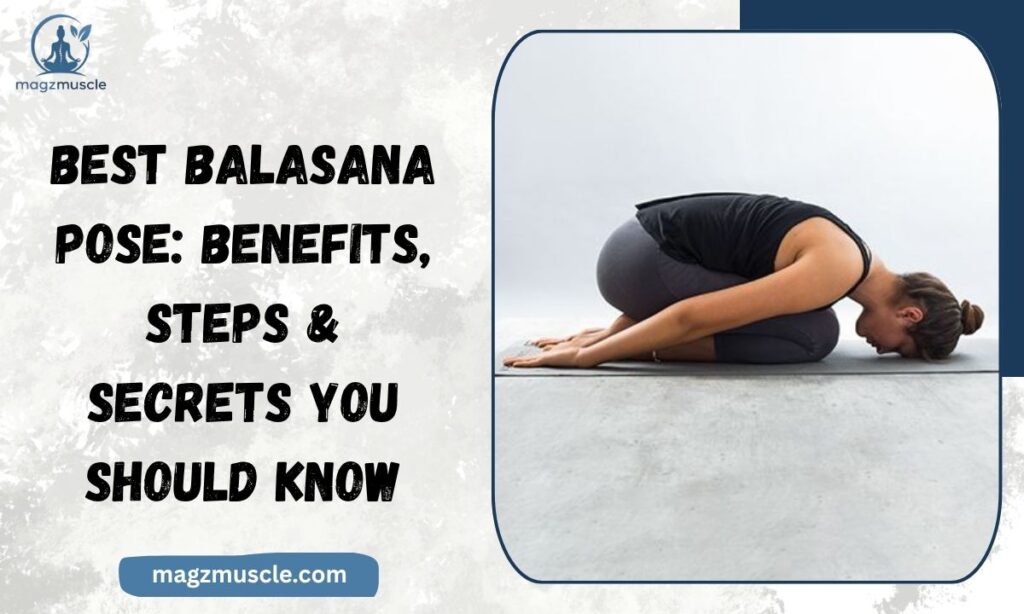
Balasana belongs to the family of restorative yoga poses, built around a kneeling forward fold rather than any active muscular effort. The hips settle back toward the heels, the chest drapes gently over the thighs, and the arms rest either alongside the body or stretched out in front. Nothing about the shape is forced, which is exactly why it works so well as a moment of rest.
Because of its calming nature, teachers often place Balasana between backbends, twists, or fast-paced standing sequences to let the heart rate settle. It gives practitioners a chance to reconnect with their breath before moving into the next posture. This adaptability is what makes it one of the most frequently used poses across every style of yoga.
| Aspect | Details |
| Pose type | Kneeling forward fold, restorative |
| Sanskrit meaning | Bala (child) + Asana (pose/seat) |
| Common use | Transition or resting pose between postures |
| Areas stretched | Spine, hips, thighs, ankles |
| Skill level | Beginner-friendly, suitable for all levels |
| Typical hold time | 30 seconds to a few minutes |
What is Balasana?
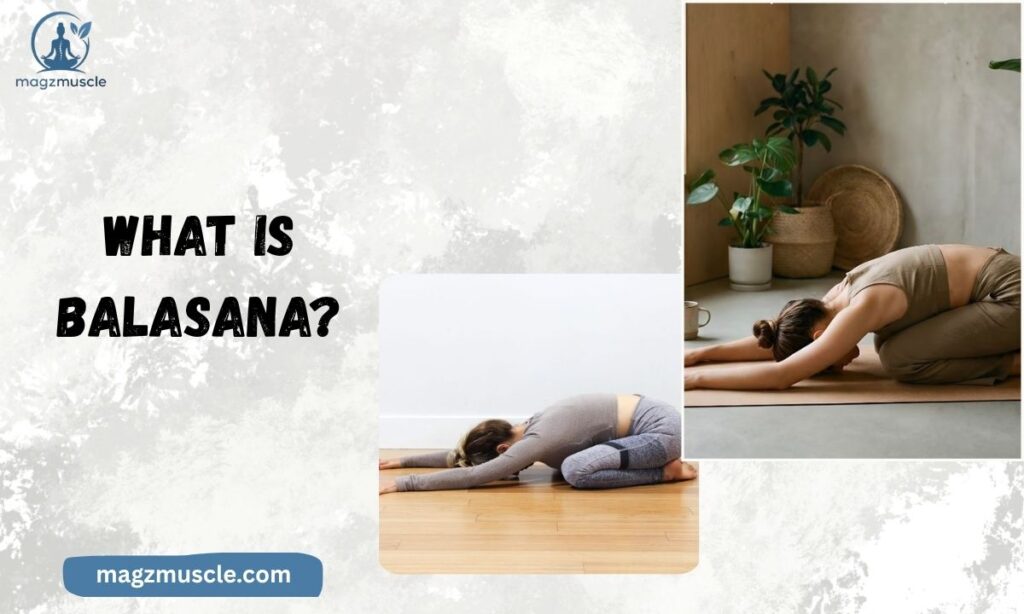
The word Balasana comes from Sanskrit. “Bala” means child, and “asana” means pose or seat. Together, the name translates to “child’s pose,” a fitting description since the posture mirrors the natural resting position many children adopt when they curl up on the floor.
In this shape, the body folds inward, the spine rounds gently, and the forehead often touches the ground. This inward fold is symbolic as well as physical. It represents surrender, safety, and a return to stillness. Many yoga traditions treat Balasana as a moment of introspection, a brief retreat from the outside world where the practitioner can simply breathe and observe.
Balasana is considered a beginner-friendly pose, but that does not make it any less valuable for advanced practitioners. Its simplicity is exactly what makes it so effective. There is no complicated alignment to master, yet the benefits touch nearly every system in the body, from the muscles and joints to the nervous system and mind.
Balasana Benefits
Balasana offers a wide range of benefits that extend well beyond a simple stretch. Regular practice supports both the body and the mind, which is why it remains a staple in yoga classes across styles, from Hatha to Vinyasa to restorative yoga.
Physical Benefits
- Stretches the spine and lower back: The forward fold gently elongates the spine, which can relieve tightness built up from sitting for long hours.
- Releases tension in the hips and thighs: Kneeling with the hips resting toward the heels stretches the hip flexors and the muscles along the front of the thighs.
- Improves flexibility in the ankles and shins: The pose stretches the front of the ankles and calves, an area that rarely gets attention in daily movement.
- Eases shoulder and neck stiffness: When the arms extend forward or rest by the sides, the shoulders broaden and release built-up tension.
- Supports healthy digestion: The gentle compression of the abdomen against the thighs can encourage better digestive function over time.
- May help regulate blood pressure and heart rate: Some research on restorative postures, including Balasana, has shown modest improvements in resting heart rate and blood pressure when practised consistently for a few minutes daily.
- Aids in recovery between poses: Because it is low-intensity, Balasana allows muscles to recover during a workout or yoga session without fully breaking the flow of practice.
Mental and Emotional Benefits
- Activates the parasympathetic nervous system: This is the body’s rest-and-digest response, which helps counter the effects of chronic stress.
- Reduces anxiety and mental fatigue: The forward fold and steady breathing pattern encourage a natural sense of calm.
- Improves focus and mindfulness: Balasana offers a quiet pause that trains the mind to stay present with the breath.
- Supports better sleep: Practising the pose in the evening can help signal to the body that it is time to wind down.
- Creates a sense of grounding and safety: The enclosed, folded shape of the pose can feel protective, which is why many practitioners describe it as emotionally soothing after a difficult day.
Balasana Pose for Child
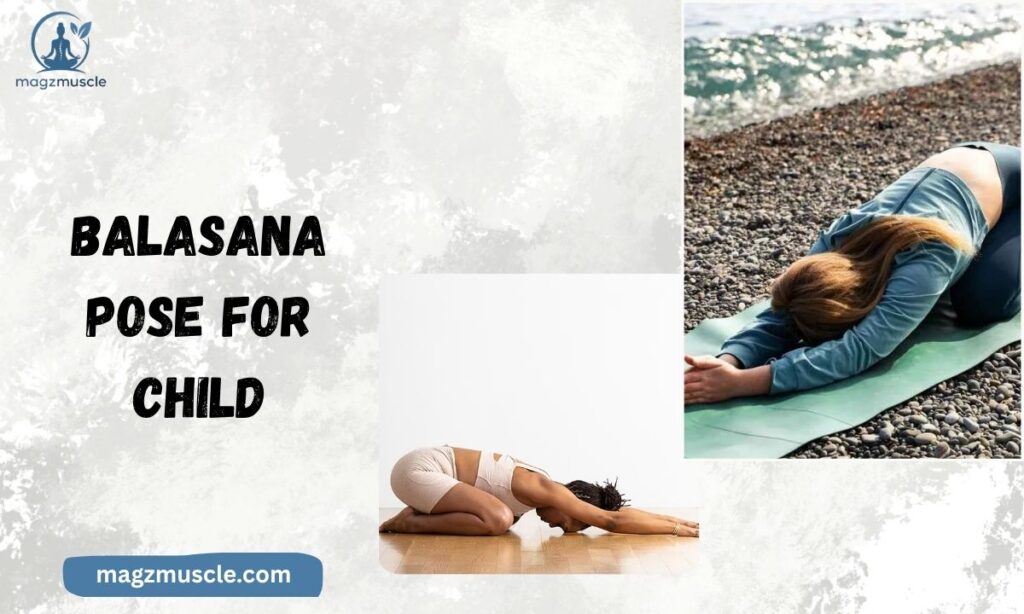
Balasana is a natural fit for children since it mirrors the same resting shape kids often curl into on their own. Its gentle, low-intensity nature makes it easy for young bodies to follow without strain or complicated instruction. Introducing this pose early can help children build a lifelong habit of pausing and breathing when they feel overwhelmed.
For kids, the pose can be framed as a fun “turtle” or “sleepy bear” shape to make it more relatable and engaging. It also works well after school or playtime, helping children settle their energy before homework, naps, or bedtime. With regular practice, it can support better focus, calmer emotions, and improved body awareness at a young age.
- Encourages relaxation and helps regulate big emotions like frustration or overstimulation.
- Gently stretches growing muscles in the back, hips, and legs without any strain.
- Builds early mindfulness habits through slow, simple breathing.
- Easy to teach with playful cues like “curl up like a turtle” or “rest like a sleepy bear.”
How to Do Balasana Step-by-Step Instructions
Balasana does not require any special equipment, though a yoga mat and an optional cushion or bolster can make the pose more comfortable. Follow these steps for correct alignment.
- Begin on your hands and knees in a tabletop position, with wrists under shoulders and knees under hips.
- Bring your big toes together to touch while separating your knees to about hip-width apart or slightly wider if you prefer a deeper stretch.
- Exhale and slowly sit your hips back toward your heels.
- Lengthen your spine as you fold your torso forward, letting your chest rest between or on top of your thighs.
- Rest your forehead gently on the mat. If it does not reach the floor comfortably, place a block, cushion, or folded blanket under your head for support.
- Extend your arms forward with palms facing down, or bring them alongside your body with palms facing up, whichever feels more restful.
- Relax your shoulders away from your ears and let your entire back body soften.
- Close your eyes and hold the pose anywhere from thirty seconds up to a few minutes, breathing slowly and evenly.
- To release, walk your hands back toward your knees and slowly lift your torso upright, stacking your spine one vertebra at a time.
Key Principles
- Keep the movements slow and deliberate rather than rushing into the fold.
- Let your hips melt toward your heels rather than forcing them down.
- Prioritise comfort over depth. A supported version of the pose still offers full benefits.
- Keep your neck relaxed and avoid straining to touch your forehead to the floor.
- Use props whenever your body asks for them. There is no less “authentic” way to practise Balasana.
Breathing in Balasana
Breath is the heart of this pose. As you fold forward, take a few rounds of slow, even inhales and exhales through the nose. With each exhale, consciously release a little more tension from the shoulders, jaw, and hips.
Some practitioners find it helpful to direct their breath into the back of the ribcage, feeling it expand gently with each inhale and soften with each exhale. This steady rhythm is what activates the body’s natural relaxation response, making Balasana as much a breathing exercise as a physical stretch.
Preparatory Poses Before Balasana

Warming up the hips, knees, and spine before settling into Balasana can make the pose more accessible and comfortable. Consider practising these poses beforehand:
- Tabletop Pose: Establishes a neutral spine and prepares the wrists and knees for kneeling postures.
- Cat-Cow Pose (Marjaryasana-Bitilasana): Warms up the spine with gentle flexion and extension.
- Thunderbolt Pose (Vajrasana): Familiarises the knees and ankles with a seated kneeling position.
- Downward-Facing Dog (Adho Mukha Svanasana): Lengthens the spine and stretches the hamstrings, which can make the forward fold in Balasana feel smoother.
- Easy Pose (Sukhasana): A brief seated pause can help settle the breath before transitioning into a kneeling fold.
Variations of Balasana
Balasana can be adjusted to fit different comfort levels and goals, from Extended Child’s Pose with arms stretched forward to Wide-Knee Child’s Pose for a deeper belly release. Supported and side-stretch variations, along with a gentle Thread the Needle twist, make the pose accessible for tight hips, pregnancy, or simply a fresh way to unwind.
Some popular variations include:
- Extended Child’s Pose: Arms stretch forward instead of resting by the sides, adding a deeper stretch through the shoulders and lats.
- Wide-Knee Child’s Pose: Knees separate wider than the hips, allowing the torso to fold lower and creating more room for the belly.
- Supported Child’s Pose: A bolster or stacked cushions placed under the torso and forehead offer extra support, ideal for restorative yoga or pregnancy-safe modifications where lying flat is not recommended.
- Side-Stretch Child’s Pose: From the standard pose, walk both hands to one side to add a lateral stretch along the ribcage, then repeat on the other side.
- Thread the Needle variation: One arm slides underneath the body while the shoulder rests on the mat, adding a gentle twist that targets the upper back.
Common Mistakes to Avoid in Balasana

Many practitioners force their hips down, hold tension in their shoulders, or skip breathing deeply, all of which reduce the pose’s calming effect. Rushing the fold, ignoring knee pain, or standing up too quickly afterward can also turn this restful posture into an uncomfortable one.
Watch out for these common errors:
- Forcing the hips down: Straining to sit fully on the heels when the hips are tight can cause unnecessary knee or ankle discomfort. Ease into the position instead.
- Holding tension in the shoulders: Many practitioners unconsciously shrug the shoulders toward the ears. Consciously relax them with every exhale.
- Skipping props when needed: Avoiding a cushion or block out of habit, even when the forehead does not comfortably reach the floor, can create strain in the neck.
- Shallow breathing: Rushing through the pose without settling into slow, deep breaths reduces its calming benefits.
- Ignoring knee pain: Sharp or persistent pain in the knees is a signal to modify the pose, not push through it.
- Rushing the transition out of the pose: Popping up too quickly can cause dizziness. Rise slowly and mindfully instead.
Who Should Practise Balasana?
Balasana is considered one of the safest and most accessible yoga poses, suitable for beginners, athletes, office workers, and experienced yogis alike.
It is particularly beneficial for:
- Anyone experiencing stress, anxiety, or mental fatigue.
- People with lower back tightness caused by long hours of sitting.
- Athletes and gym-goers looking for a gentle stretch to complement more intense training.
- Yoga practitioners who want an effective transition or resting pose during a sequence.
- Those seeking better sleep through a calming pre-bedtime routine.
However, a few precautions are worth noting. Pregnant women should avoid a deep fold that compresses the abdomen and may prefer a wide-knee or supported variation instead. People with knee injuries, recent knee surgery, or severe joint pain should approach the pose cautiously, using extra padding or consulting a yoga instructor or physiotherapist for a suitable modification.
Those with diarrhoea or certain digestive conditions may also be advised to skip deep forward folds temporarily. When in doubt, it is always best to check with a certified yoga teacher or your doctor before beginning any new stretching routine.
Make Balasana a Part of Your Daily Practice
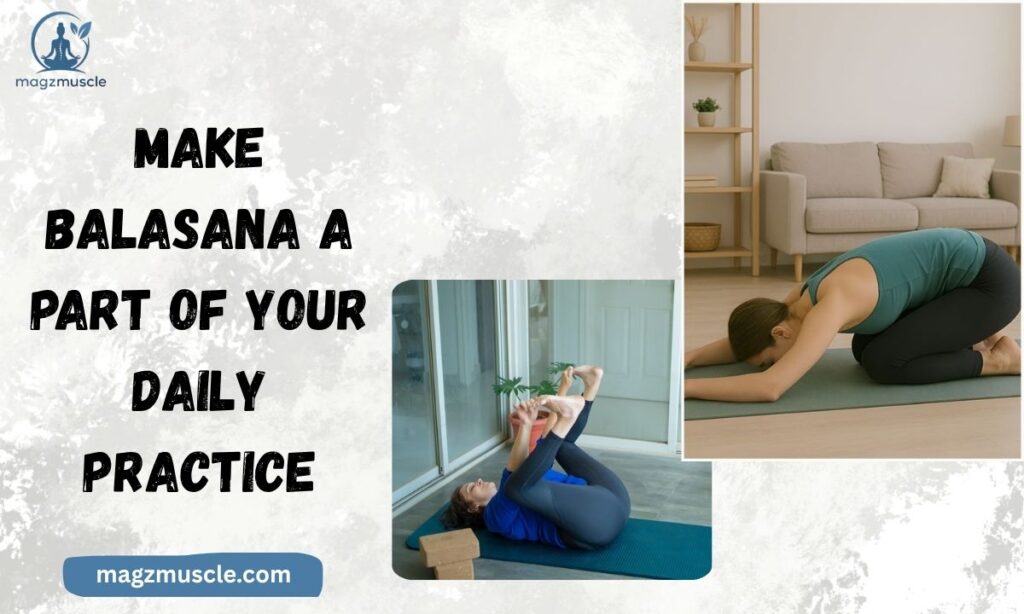
Balasana proves that the most restorative movements are often the simplest ones. It asks for no advanced flexibility, no complicated technique, just a willingness to fold inward, breathe, and let go. Whether you practise it for a few breaths between yoga poses or hold it for several minutes as a standalone stress-relief ritual, the benefits accumulate with consistency.
Try adding Balasana to your morning routine to ease stiffness from sleep, or use it in the evening to unwind after a long day at a desk. Over time, this gentle kneeling fold can become a dependable anchor, a pose you return to whenever your body or mind needs a moment of quiet.
Frequently Asked Questions
What is Balasana and its benefits?
Balasana is a gentle resting pose that may relax the body, stretch the hips and back, and calm breathing.
When should you avoid Balasana?
Avoid Balasana if it causes pain or discomfort, especially with certain knee, hip, or ankle problems.
How to do Balasana correctly?
Kneel down, sit toward your heels, fold forward, extend your arms, and breathe slowly in a comfortable position.
How long should you hold Balasana?
Beginners can hold Balasana for 30 seconds to one minute, gradually increasing the time as comfortable.
What are the disadvantages of the Balasana pose?
Balasana may feel uncomfortable for people with knee, hip, or ankle issues and should never cause pain.
What is the hardest yoga pose to hold?
There is no single hardest yoga pose; difficulty depends on strength, flexibility, balance, experience, and individual body control.
Conclusion
The balasana pose is a simple and calming yoga posture. It gives your body time to rest and relax. Balasana can help you slow your breathing and release everyday tension. The balasana benefits also include gentle stretching for the back, hips, and thighs. With simple balasana steps, beginners can easily add this pose to their yoga routine.
The balasana pose is also known as child pose balasana. It is a great choice after active yoga poses or whenever you need a short break. Practice the balasana steps slowly and stay within a comfortable range. Regular balasana pose practice can support relaxation, flexibility, and better body awareness. Keep your breathing smooth and relaxed while holding the pose. These simple balasana benefits make it a useful part of many yoga routines.