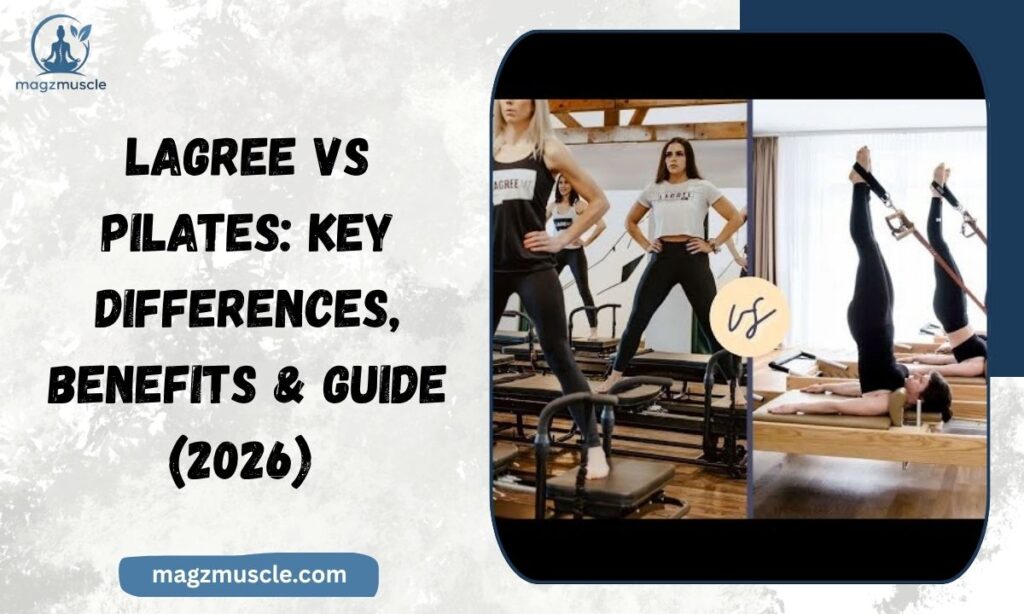

Many people hear about lagree vs pilates and wonder which one is better for their body and fitness goals. It can feel confusing because both workouts look similar, but they offer different results. If you’re unsure which one to choose, you’re in the right place.
This guide explains lagree vs pilates in simple words so you can easily understand the differences. You’ll learn how each workout works, who it is best for, and what results you can expect. By the end, you’ll have the confidence to choose the option that fits your needs.
Lagree VS Pilates VS Reformer Pilates
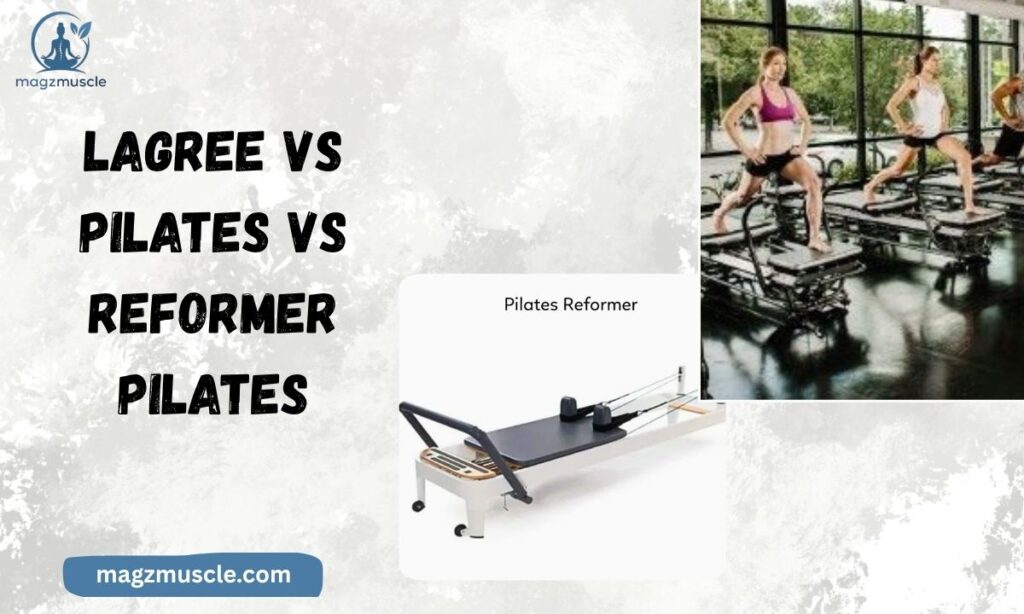
Lagree, Pilates, and Reformer Pilates often get confused because they all trace back to the same sliding-carriage concept, but each one delivers a different training experience. Pilates in its broadest sense includes mat-based work focused on breath, control, and alignment with little to no equipment.
Reformer Pilates adds spring resistance for more variety, while Lagree pushes that same equipment lineage into high-intensity, full-body conditioning territory.
| Factor | Pilates (Mat) | Reformer Pilates | Lagree |
| Equipment | None or light props | Reformer, springs | Megaformer, double springs |
| Intensity | Low | Low to moderate | High |
| Primary focus | Breath, control, alignment | Core strength, flexibility, posture | Muscular endurance, cardio, full-body toning |
| Pace | Slow, controlled | Slow to moderate | Very slow tempo, constant tension |
| Best for | Beginners, rehab, mobility | Building on mat foundations | Fast, intense full-body results |
Lagree VS Pilates Weight Loss
When it comes to weight loss, Lagree generally has the edge over traditional Pilates. Its fast transitions, constant muscle tension, and full-body sequencing keep the heart rate elevated throughout the class, which drives a higher calorie burn per session. Pilates supports weight loss more indirectly, by building lean muscle, improving movement efficiency, and often complementing other cardio work.
A few factors explain why Lagree tends to burn more in a single session:
- Minimal rest between exercises keeps intensity and heart rate high
- Heavier spring resistance demands more muscular effort throughout
- Full-body sequencing engages multiple muscle groups at once rather than isolating one area
That said, weight loss ultimately depends on consistency, nutrition, and overall activity level, not just the workout itself. Pilates can still support fat loss goals when practiced regularly and paired with a calorie-conscious diet. The real question isn’t which method burns more in one class, but which one you’ll actually stick with long enough to see results.
The Core Principles of Pilates
Joseph Pilates developed his method in the early twentieth century while working with dancers and rehabilitation patients. He called it Contrology, a system built around six founding ideas: breathing, concentration, control, centering, precision, and flow. Every class, whether performed on a mat or a Reformer, is built on these principles.
Breathing That Powers Every Pilates Move
Pilates uses a specific lateral breathing pattern, expanding the ribcage sideways on the inhale while keeping the abdominal wall engaged. This breath pattern oxygenates the muscles, supports the spine during movement, and keeps the core switched on throughout every exercise.
Axial Elongation and Core Control: Align for Efficient Movement
Axial elongation means lengthening the spine upward while the core stays braced. This principle teaches the body to move from a stable center rather than compensating with the lower back or neck, which is a major reason Pilates is so often recommended for injury recovery.
Spine Articulation: Stack and Mobilize Your Vertebrae
Rather than moving the spine as one rigid unit, Pilates trains you to roll through it one vertebra at a time. This builds spinal mobility, improves posture, and helps release tension that builds up from sitting or repetitive movement patterns.
Organizing Head, Neck, and Shoulders to Reduce Strain
Poor shoulder and neck positioning is one of the most common causes of strain in any workout. Pilates instructors cue students to keep the shoulder blades gently drawn down and back, which protects the neck and lets the deeper core muscles do the work instead.
Weight Bearing and Alignment of the Extremities: Use Limbs as Stable Supports
Arms and legs are trained as stable, load-bearing structures. Whether you’re in a plank on the Reformer or holding a leg in the air, correct joint alignment reduces strain on the wrists, knees, and hips while maximizing muscle recruitment.
Movement Integration: Build a Consistent Mind-Body Connection
Pilates is often described as a thinking person’s workout. Every rep asks for focus, not just repetition. Over time, this mind-body connection carries over into daily posture, balance, and how efficiently you move outside the studio.
Related Reading
- What Is Reformer Pilates and Who Is It For?
- Mat Pilates vs Reformer Pilates: Which Should You Try First?
- Beginner’s Guide to Pilates Breathing Techniques
The Core Principles of Lagree

Lagree was created by Sebastien Lagree in the early 2000s. He started as a Pilates instructor, but his clients wanted more intensity without added impact on their joints. That demand led him to build the Megaformer and develop a completely separate training system rooted in bodybuilding concepts like time under tension and progressive overload, rather than in Pilates’ original philosophy.
How Lagree Compares With Pilates And Reformer Work
Both methods share a sliding-carriage machine heritage and a low-impact approach. That’s where the similarity ends. Pilates favors slow, precise, rehab-minded movement. Lagree layers heavier spring resistance, a wider range of motion, and constant muscular tension on top of that foundation to create a full-body strength and conditioning workout.
Magic 8 Principles: The Rules That Shape Every Lagree Session
Every Lagree class is built around eight training principles, sometimes called the Magic 8. These principles are what separate Lagree from a standard Reformer workout.
1. Form
Alignment and posture come before intensity. Correct positioning recruits the right muscles and protects the joints, so form is always prioritized over speed or load.
2. Range of Motion
Movements stay within a controlled working zone. You never lock out fully or collapse into a resting position, which keeps tension on the target muscle the entire time.
3. Tempo (Isokinetic)
Lagree uses a deliberately slow, even tempo. A typical rep might take eight to sixteen counts to complete, eliminating momentum so muscles do all the work.
4. Duration (Endurance)
Instead of counting reps, Lagree measures time under tension. Core and arm exercises are often held for a minute or more, while leg work can run even longer.
5. Sequence
Exercises are ordered to keep specific muscle groups under continuous demand, moving logically from one position to the next without wasted motion.
6. Transition
Rest between exercises is kept to a minimum. Fast, efficient transitions keep the heart rate elevated and turn a strength session into a cardio session at the same time.
7. Resistance
The Megaformer uses adjustable spring tension, which is easier on connective tissue than free weights while still triggering real strength gains.
8. Planes of Motion
Movements are programmed across all three planes, front to back, side to side, and rotational, mirroring how the body actually moves in daily life and sport.
Practical Trade Offs: Who Should Choose Lagree
Lagree suits people who want a fast, efficient, full-body burn and are comfortable working close to muscular fatigue. It’s a strong option if you’re short on time but want strength, cardio, and core work in one session.
Want to Try a Session?
Most studios offer an introductory class at a reduced rate. Booking one beginner session is the simplest way to feel the tempo and resistance for yourself before committing to a package.
The Role of Expert Instruction in Delivering Fun, Safe, and Results-Driven Workouts
Because Lagree moves are slow but demanding, form errors are easy to miss without a trained eye. Certified instructors correct alignment in real time, which keeps the workout both safe and genuinely effective.
Lagree VS Pilates Results

Pilates results tend to show up first as better posture, control, and range of motion, often noticeable within two to three sessions. Long-term, it builds a lean, stable core and improved body awareness rather than dramatic muscle definition.
Lagree results lean more visible and faster, with muscle tone and endurance gains often showing within two to four weeks of consistent training. Combined with its higher calorie burn, it tends to produce more noticeable body composition changes in a shorter timeframe.
Lagree VS Pilates VS Yoga
Lagree, Pilates, and Yoga all fall under the low-impact umbrella, but they train the body toward different outcomes. Yoga emphasizes flexibility, breath, and mind-body balance, Pilates emphasizes core control and alignment, and Lagree emphasizes strength and endurance under constant tension.
The clearest differences show up in intensity and goals:
- Yoga and Pilates prioritize mobility, breath work, and low-intensity control
- Lagree prioritizes muscular endurance, cardio conditioning, and faster physical results
Many people actually combine all three, using yoga for flexibility and recovery, Pilates for core stability, and Lagree for strength and calorie burn. The right mix depends on whether your main goal is calm and mobility or intensity and visible change.
Pilates vs Lagree: Key Differences Between the Two Workout Methods

Pilates and Lagree may share a sliding-carriage machine heritage, but they train the body in noticeably different ways. Pilates favors slow, precise, low-intensity movement built around control and alignment, while Lagree layers heavier resistance and constant tension for a faster, higher-intensity result. The table below breaks down the core differences at a glance.
| Factor | Pilates | Lagree |
| Machine | Reformer | Megaformer |
| Intensity | Low to moderate | High |
| Primary focus | Core stability, flexibility, posture | Strength, endurance, full-body toning |
| Best for | Beginners, rehab, mobility work | Fast results, seasoned exercisers |
| Time to visible results | 2 to 3 sessions for control/posture gains | 2 to 4 weeks for muscle tone and endurance |
What the Machines Do for You: Reformer Versus Megaformer
The Pilates Reformer uses a moving carriage and a set of springs for light to moderate resistance across a controlled range of exercises. The Megaformer builds on that design with double the springs, added platforms and handles, and far more adjustment options, which allows for far greater resistance and exercise variety.
Primary Focus Areas and Performance Gains
- Pilates: core stability, flexibility, postural alignment, and rehabilitation
- Lagree: muscular strength, muscular endurance, cardiovascular conditioning, and full-body toning
Who Should Choose Which: Intensity and Accessibility
Pilates is generally low to moderate intensity, which makes it accessible for beginners, older adults, and anyone recovering from injury. Lagree is high-intensity by design, better suited to people who already move comfortably and want to push harder.
Typical Results and How Fast They Appear
Most people notice better control, posture, and range of motion within two to three Pilates sessions. Lagree clients often report visible muscle tone and improved endurance within two to four weeks of consistent training, alongside a noticeable jump in cardiovascular fitness.
Mental and Emotional Effects of Each Practice
Pilates tends to leave people feeling calm, centered, and mentally focused, since each rep demands concentration rather than speed. Lagree delivers more of an endorphin-driven, high-energy payoff, similar to how people feel after a demanding strength or cardio class.
Related Reading
- Reformer Pilates vs Megaformer: Machine Differences Explained
- How Long Does It Take to See Results From Lagree?
- Low Impact Workouts That Still Build Real Strength
Choosing Between Pilates and Lagree

Choosing between Pilates and Lagree really comes down to what your body needs right now, not which workout is trending. Pilates suits anyone prioritizing posture, mobility, or a safe return from injury, while Lagree suits anyone chasing strength, endurance, and visible results fast. Both are low-impact, so the real deciding factor is intensity and pace, not joint safety.
Before committing to either, weigh a few practical factors:
- Your current injury history and joint sensitivity
- How much intensity you actually want from a session
- How quickly you want to see visible results
Once you’re honest about those three points, the choice tends to make itself. Someone rebuilding strength after an injury will lean Pilates, while someone with a solid fitness base wanting a faster transformation will lean Lagree. And if you’re still torn, trying one beginner class of each remains the most reliable way to decide.
Pilates: The Path to Posture, Mobility, and Rehabilitation
If your main goals are better posture, joint mobility, or recovering safely from an injury, Pilates is generally the better starting point. Its slower pace and rehab-based history make it easier to adapt to individual limitations.
How Your Injury History and Joint Sensitivity Should Guide the Choice
Anyone with a recent injury, chronic joint pain, or a condition affecting balance should lean toward Pilates or a modified Lagree class, and should always get medical clearance before starting either method.
Safety and Adaptation: Approaching Lagree with Pre-Existing Conditions
Lagree can still work for people with joint sensitivity, since spring resistance is gentler on connective tissue than free weights. The key is working with a certified instructor who adjusts spring tension, range of motion, and exercise selection to your body.
What the Class Feels Like: Calm Control or a Sweat Session?
A Pilates class feels measured and internal, with an instructor cueing breath and precision throughout. A Lagree class feels intense and physically demanding almost immediately, with music, sweat, and visible shaking muscles as the springs do their work.
Practical Choices: Frequency, Equipment, and Time to Results
- Pilates: 2 to 4 sessions per week, minimal equipment needed if practicing mat work
- Lagree: 2 to 3 sessions per week is usually enough given the intensity, and it requires access to a Megaformer
Equipment and Environment: How Class Size and Coaching Impact Your Progress
Smaller class sizes in either method mean more individual correction, which lowers injury risk and speeds up progress. Look for studios that cap class numbers and staff certified instructors rather than general fitness coaches.
How to Test It Safely: Try Both with Clear Metrics
Book one beginner Pilates class and one beginner Lagree class within the same two-week window. Track three simple measures before and after: joint discomfort, how long you can hold a plank or maintain good posture, and how quickly you recover between sessions.
Book a Lagree Class in London Today
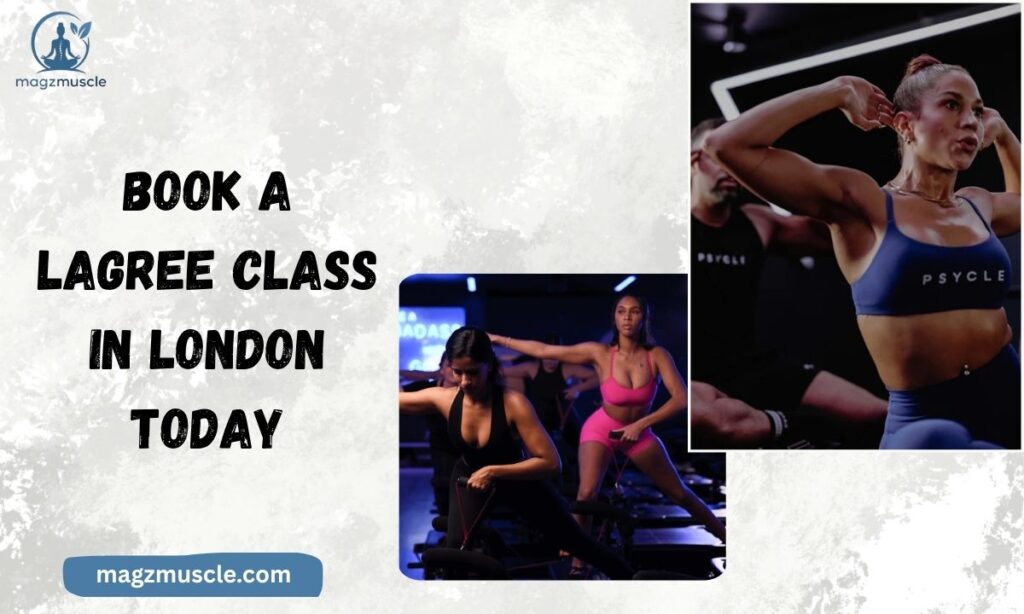
If you’re based in London and ready to feel the difference for yourself, the best next step is simple: book a beginner Megaformer class. A single session tells you more about Lagree’s intensity, tempo, and full-body demand than any comparison article can. Most studios offer a discounted first class specifically so newcomers can test the format with low commitment.
London’s boutique fitness scene has made Lagree easier to access than ever, with certified studios offering small class sizes and hands-on coaching. That guidance matters, since correct form is what separates real results from wasted effort or strain. Choose a studio near your daily route, book your first class this week, and let your body decide the rest.
How Lagree and Pilates Contrast When You Want Results Fast
If speed of results matters most, Lagree typically has the edge. Its combination of resistance, minimal rest, and full-body sequencing burns more calories per session and builds visible muscle tone faster than traditional mat or Reformer Pilates.
What the Equipment and Movement Feel Like in Each Method
Expect a Megaformer session to involve small, precise movements, isometric holds, and constant spring resistance pulling against you. It’s a very different sensation from the smoother, lighter resistance of a Pilates Reformer.
Why Instructor Certification and Mentorship Reduce Injury Risk
Lagree’s slow tempo hides how much force is actually involved. A certified instructor catches subtle form breakdowns before they become strain, which is why studio quality matters as much as the workout itself.
Class Structure: 45 Minutes That Mix Strength and Cardio
A typical Lagree class runs around 45 minutes and moves through blocks targeting legs, core, and upper body, with brief transitions keeping your heart rate elevated the entire time.
What to Expect in Two Weeks of Consistent Training
Two weeks of consistent Lagree training usually brings noticeable improvements in core stability, muscular endurance, and how quickly you recover between sessions, even before major visual changes appear.
Why Community and Environment Keep People Coming Back
Boutique studio energy, small class sizes, and instructors who know your name all play a role in long-term consistency. A workout only works if you keep showing up, and the right studio environment makes that far easier.
Related Reading
- What Is the Lagree Method? A Complete Beginner’s Guide
- Megaformer Workout Benefits for Strength and Toning
- How to Choose a Lagree Studio Near You
Frequently Asked Questions
Is Lagree harder than Pilates?
Yes, Lagree is generally harder than traditional Pilates because it combines strength, endurance, and constant muscle tension in every workout.
Is Lagree or Pilates better for weight loss?
Lagree often burns more calories than traditional Pilates, making it a better choice for weight loss when paired with healthy eating.
Can you get toned from Lagree?
Yes, regular Lagree workouts help build lean muscle, improve strength, and create a more toned, defined body over time.
How many calories do 45 minutes of Lagree burn?
A 45-minute Lagree session typically burns around 250–450 calories, depending on workout intensity, body weight, and fitness level.
Does Lagree flatten the stomach?
Lagree strengthens your core and builds abdominal muscles, but a flatter stomach also depends on overall body fat reduction and nutrition.
Conclusion
Lagree vs pilates depends on your fitness goals and experience. Both workouts improve strength, flexibility, and balance. Lagree vs pilates is a popular comparison because each offers unique benefits. Lagree is more intense, while Pilates is gentler and focuses on control.
In the end, lagree vs pilates is about choosing what suits your body best. Both can help you get stronger and healthier with regular practice. Understanding lagree vs pilates makes it easier to pick the right workout and stay consistent.