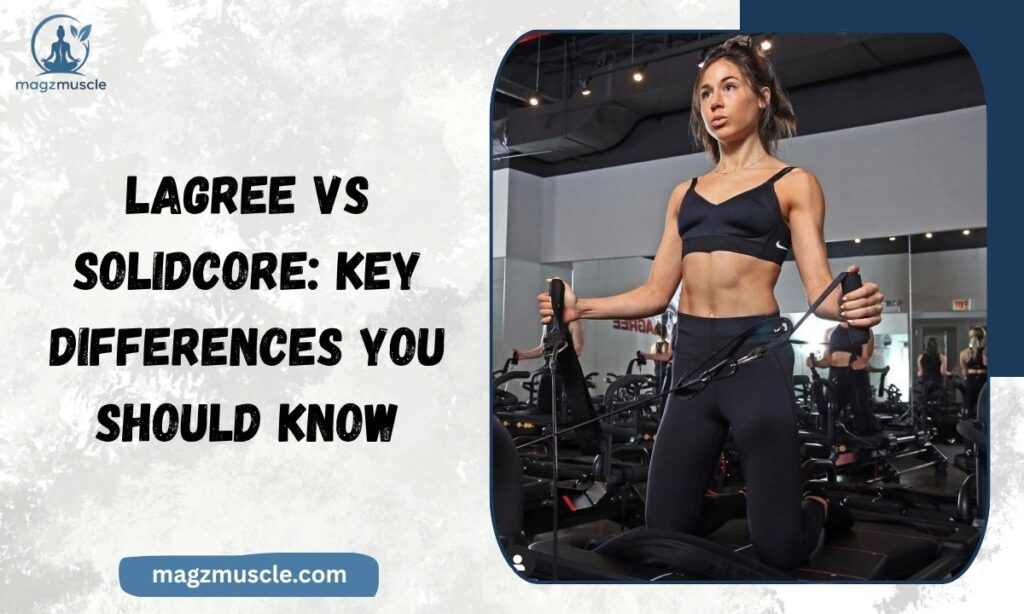

If you are trying to choose between lagree vs solidcore, you are probably wondering is solidcore lagree or if they are completely different workouts. Many people also search solidcore vs lagree, is solid core lagree, and solidcore lagree because the classes look so similar. It can feel confusing to know which one is the better fit for your goals.
In this guide, we will break down lagree vs solidcore in simple words so you can easily understand the key differences, benefits, and what to expect from each workout. By the end, you’ll know which method matches your fitness level and personal goals.
Lagree VS Solidcore
Lagree and SolidCore are both low-impact, high-intensity workouts built on reformer-style machines, but they differ in pace, tension, and overall class energy. The table below breaks down the core differences at a glance.
| Feature | Lagree | SolidCore |
| Machine | Megaformer | SolidCore Reformer |
| Pace | Slow, controlled | Fast, punchy intervals |
| Hold Time | 30 to 90 seconds | Shorter pulses |
| Class Vibe | Calm and focused | High-energy and driven |
| Muscle Fatigue | Gradual, endurance-based | Rapid, near-failure |
| Class Length | 45 minutes | 45 to 50 minutes |
| Impact Level | Low impact | Low impact |
What is a Lagree Workout?

Lagree is a high-intensity, low-impact strength workout performed on a specialized machine called the Megaformer. It combines strength training, endurance, flexibility, and cardio into one efficient session, all without any jumping or hard impact.
Unlike traditional gym workouts, Lagree relies on slow, controlled movement and constant muscle tension rather than heavy weights or fast reps. This approach builds full-body strength and core stability while staying gentle on the joints throughout every class.
How Lagree Works: The Science Behind the Method
Lagree relies on time under tension rather than speed or heavy loads. Muscles stay contracted through slow, controlled movement, which recruits more muscle fibres over a longer window and creates a deep burn without high-impact stress on joints or connective tissue.
The Megaformer: The Machine That Controls Everything
The Megaformer is a spring-loaded carriage machine with adjustable resistance, multiple handles, and a sliding platform. Instructors change spring tension in seconds, which lets one machine deliver dozens of exercises targeting legs, arms, glutes, and core in a single class.
Why It Works Like Strength Endurance Flexibility Cardio and Core All At Once
A single Lagree move can raise your heart rate, stretch a muscle under load, and build strength simultaneously. Because there’s little rest between exercises, the workout doubles as cardio, while the isometric holds build muscular endurance and control.
Low Impact High Intensity That Protects Joints
There’s no running, jumping, or bouncing in a Lagree class. The muscle, not the joint, absorbs the load, which makes it a practical option for people managing knee, hip, or back sensitivity while still training at a high intensity.
The Magic 8 Principles That Guide Each Session
Lagree instructors are trained around eight core principles: constant tension, slow controlled movement, correct alignment, proper breathing, effective range of motion, angle of resistance, transitions with no rest, and full-body engagement in every exercise.
What a Typical Lagree Class Looks Like
- A short warm-up to activate the core and stabilising muscles
- Rotating stations working legs, arms, glutes, and back
- Long isometric holds, often 30 to 90 seconds per position
- A core-focused finisher
- A brief stretch and cool-down
Who Benefits Most and Who Should Be Careful
Lagree suits people who want a full-body, low-impact strength workout, including runners, desk workers, and anyone recovering from high-impact training. Beginners with limited core strength or acute injuries should start with a modified class and speak to their instructor first.
Common Results and What to Expect Over Weeks
Most people notice better muscle tone and core control within 3 to 4 weeks of consistent classes, with visible strength and posture changes by 8 to 12 weeks. Results depend on frequency, nutrition, and how much recovery you build into your week.
Trial Classes and First-Time Expectations
Expect muscle shake, especially in the legs and core, and next-day soreness after your first class. Most studios recommend a beginner-friendly intro session so an instructor can walk you through machine setup and form before you join a full-intensity class.
Related Reading
For more on how Lagree compares to other reformer-based and Pilates workouts, see our guides on Lagree versus Pilates and how the Megaformer differs from a standard reformer.
Must Read: Lagree Before and After: Real Results Revealed
What is SolidCore Workout?

SolidCore is a strength-training format built on a Pilates-inspired reformer machine, designed to fatigue muscles quickly through short, controlled reps and pulses. Classes run around 50 minutes and blend high energy with focused muscle work.
Unlike traditional Pilates, SolidCore leans into intensity, pushing each muscle group toward near-failure before moving to the next exercise. The result is a fast-paced, low-impact workout that builds strength while keeping joints protected.
What SolidCore Is: The Machine and the Method
SolidCore workouts run on a custom reformer machine with adjustable resistance bands and a sliding carriage. It shares Pilates-inspired mechanics with Lagree but is programmed with its own class structure and coaching cues.
How the Workouts Are Programmed to Build Strength
Classes are built around structured intervals of controlled movement followed by brief pulses, targeting one muscle group until near-fatigue before moving on. This programming style is designed to hit muscular failure quickly within the class.
What a Class Feels Like and How Coaches Run It
SolidCore classes tend to feel high-energy, with upbeat music, motivating cues, and a coach pushing the room through intense intervals. The pace is noticeably faster than a typical Lagree class, with less time spent on any single hold.
How SolidCore Compares with Lagree Style Workout
Both use spring or band-based resistance and a sliding carriage, but SolidCore leans into faster tempo and shorter, harder bursts, while Lagree stretches out each rep to maximise time under tension.
Tempo Training and Muscle Fatigue
SolidCore uses quicker pulses and shorter holds to reach muscle fatigue faster, while Lagree extends each hold to build endurance and control gradually across a longer time frame.
Who Benefits Most from This Format
People who enjoy high-energy group fitness, shorter holds, and a fast-paced class atmosphere tend to prefer SolidCore, particularly those coming from HIIT or bootcamp-style backgrounds.
Why Choose BLOOD, SWEAT & TEARS for Lagree in London
If the slower, precision-focused style of Lagree appeals to you more than a fast-paced format, Blood, Sweat & Tears offers certified Lagree instruction on the Megaformer, with small classes and hands-on coaching for every fitness level.
Key Similarities Between Lagree and SolidCore
Despite their different pacing, Lagree and SolidCore share a common foundation built on spring-loaded reformer machines and controlled, low-impact movement. Both are designed to build strength and tone muscle without the joint stress of running or jumping.
Core engagement, full-body focus, and structured class formats also run through both methods, making them equally effective for functional strength. These shared principles are part of why so many people find either workout a strong fit for long-term fitness.
Machine Mechanics and Resistance Design
Both use a sliding carriage with adjustable spring or band tension, letting instructors change resistance instantly to suit different exercises and fitness levels within the same class.
Movement Style and Tempo Control
Both methods prioritise controlled, deliberate movement over momentum, which keeps tension on the muscle throughout the full range of motion rather than relying on speed.
Low Impact High Intensity Work
Neither workout includes jumping, running, or heavy joint-loading movements, so both are considered joint-friendly options for building strength without the wear of traditional high-impact training.
Core Engagement and Full Body Focus
Every exercise in both formats requires active core bracing, whether you’re working your arms, legs, or glutes, which makes core strength a byproduct of nearly every move.
Scalability and Safety
Instructors in both systems can adjust resistance, range of motion, and tempo to accommodate beginners, injuries, or advanced athletes within the same class structure.
Class Format and Coaching Style
Both run roughly 45 to 50 minutes with hands-on instructor cueing, rotating stations, and a structured flow from warm-up through core work to cool-down.
Training Goals and Outcomes Emphasized
Muscle tone, core strength, functional endurance, and cardiovascular conditioning are the shared outcomes both methods are designed to deliver over consistent, regular practice.
Key Factors to Compare Before You Choose
- Preferred pace: slow and controlled versus fast and punchy
- Class energy: calm and precise versus high-energy and driven
- Machine availability at studios near you
- How your joints and muscles respond to longer holds versus shorter bursts
- Instructor certification and studio experience
Key Differences Between Lagree and SolidCore

While Lagree and SolidCore share similar machines and low-impact principles, the way each class is paced sets them apart. Lagree favours long, sustained holds, while SolidCore moves through faster, punchier intervals.
These differences show up in muscle fatigue, class energy, and even studio atmosphere, from calm and precise to loud and high-driven. Understanding these contrasts can help you choose the format that matches your training style and goals.
Slow Burn Versus Fast Burn: Pace and Time Under Tension
Lagree favours long, sustained holds that build a slow, deep burn, while SolidCore uses shorter, quicker pulses that fatigue muscles faster within a tighter time frame.
Muscle Work: Endurance Holds versus Rapid Fatigue
Lagree trains muscular endurance through extended isometric holds, whereas SolidCore is programmed to push a muscle group to near-failure quickly, then move on to the next.
Class Vibe: Mindful Control or High Energy Push
Lagree studios generally feel calmer and more focused on alignment and breath, while SolidCore leans into loud music and a more intense, motivational group energy.
Machines Compared: Megaformer versus SolidCore Reformer
The Megaformer offers a wider carriage and more spring configuration options, giving instructors more exercise variety, while the SolidCore reformer is streamlined for its specific class format.
Joint Load: Low Impact Choices and Recovery
Both are low-impact, but Lagree’s longer holds may feel gentler on connective tissue for some people, while SolidCore’s faster pace can feel more demanding on stabilising joints during pulses.
Studio Energy: Calm Precision or Group Drive
Lagree studios typically favour a bright, minimal, focused atmosphere, while SolidCore studios are built around a louder, more communal, high-drive group fitness experience.
Safe, Structured, and Supportive Training for Women
Both formats are widely popular with women seeking structured strength training without bulk, and both rely on certified coaching to keep form safe through every rep and hold.
Related Reading
Explore our comparisons of Lagree versus traditional Pilates and Lagree versus HIIT training for more context on how these low-impact strength formats stack up.
Which Workout is Best for You Between Lagree and SolidCore
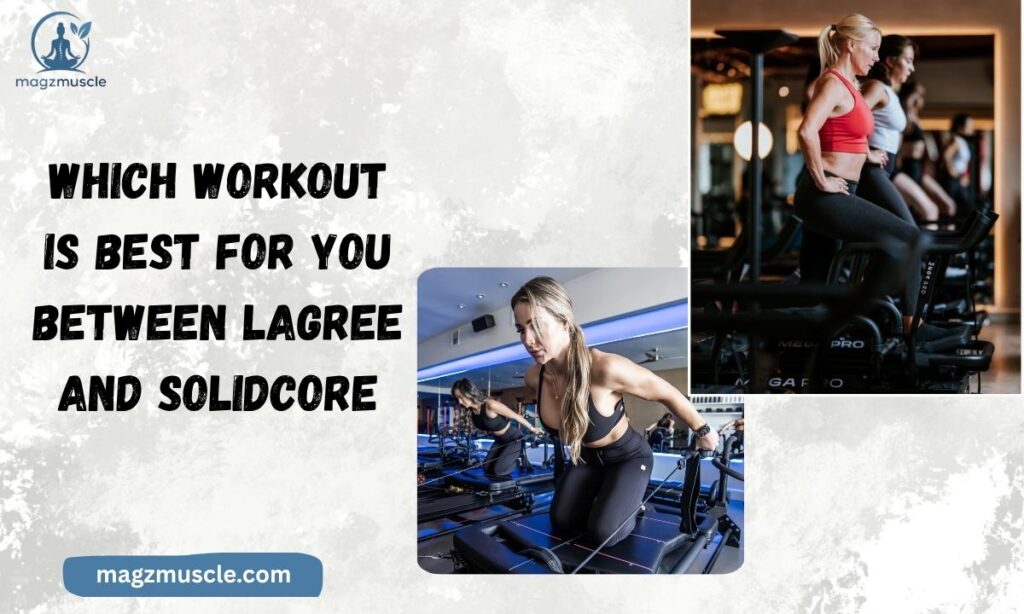
Choosing between Lagree and SolidCore ultimately comes down to pace, energy, and how your body responds to each style of resistance training. Both deliver real strength and core results, so personal preference matters more than which one is “better.”
If you’re drawn to slower, more controlled movement with longer holds, Lagree is likely the better fit for your goals. If you thrive on fast intervals and a high-energy group atmosphere, SolidCore may suit your style more closely.
Why People Choose Lagree
People choose Lagree for its slower, more mindful pace, full-body sculpting effect, joint-friendly design, and the ability to build serious strength without high-impact movement.
When SolidCore Might Appeal
SolidCore appeals to people who want a faster-paced, high-energy class with quick muscle fatigue and a more traditional group fitness feel.
How to Decide: Match Workout to Your Goals
- Choose Lagree if you want longer holds, mindful pacing, and full-body low-impact training
- Choose SolidCore if you prefer fast intervals and a high-energy group class
- Try both with an intro class before committing to a membership
- Factor in studio location, schedule, and instructor certification
Related Reading
See our guide on how to choose your first Lagree class and what beginners should know before booking.
Book a Lagree Class in London Today
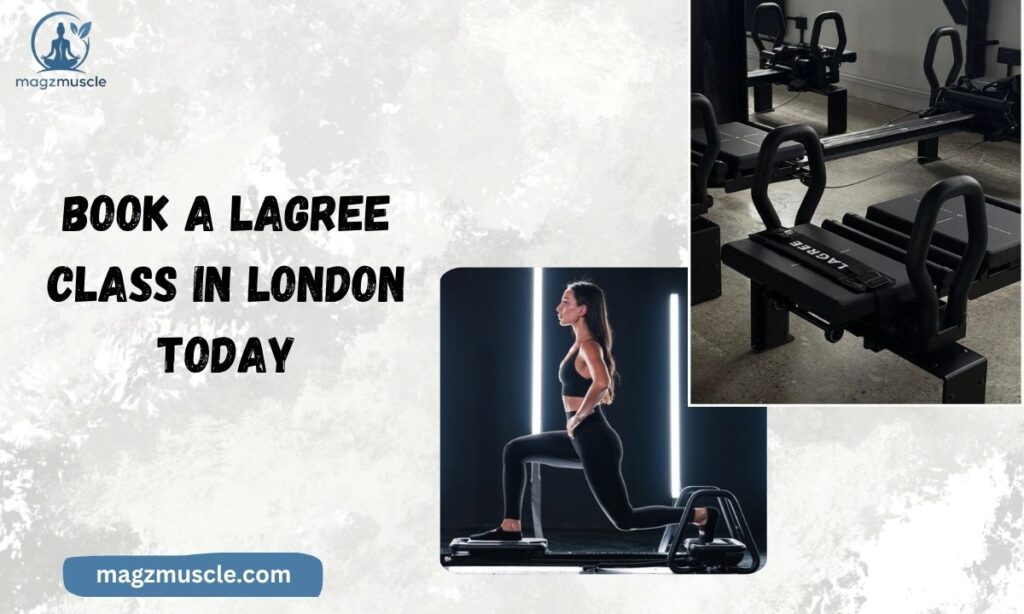
If you’re ready to feel the difference a slow, controlled, full-body workout can make, Blood, Sweat & Tears makes it easy to get started in London. Simply book an intro class online and choose a studio and time that works for you.
Every class is led by certified instructors who guide you through the Megaformer step by step, so you’ll never feel lost on your first visit. Reserve your spot today and see why Lagree has become one of the most in-demand workouts in the city.
Why Lagree Often Outpaces SolidCore for Busy Women
For women juggling work, family, and limited free time, a single 45-minute Lagree class delivers strength, cardio, and core work all at once. There’s no need to schedule separate sessions for different training goals, which makes it easier to stay consistent.
The low-impact design also means less recovery time between classes, so it fits more easily around a busy weekly routine. That combination of efficiency and joint-friendly intensity is why many time-strapped women choose Lagree over higher-impact alternatives.
What a Typical 45 Minute Class Looks Like
A typical 45-minute Lagree class opens with a short warm-up to activate the core, followed by rotating stations on the Megaformer that target legs, arms, glutes, and back. Each station blends slow, controlled reps with longer isometric holds to keep muscles under constant tension.
Toward the end, the class shifts into a focused core segment before winding down with a brief stretch and cool-down. The pacing stays steady throughout, so you leave having worked your whole body without a single high-impact move.
Instructor Quality and Safety Protocols
Every instructor completes a rigorous certification and mentorship program before leading a class, so coaching quality stays consistent across every session. This training covers machine setup, exercise progressions, and how to spot and correct form in real time.
Safety is built into every class through hands-on cueing, modifications for injuries or limited mobility, and close attention to alignment during each hold. This level of oversight is what allows high-intensity training to stay genuinely low-impact and joint-friendly.
How Fast You Can Expect to See Changes
Most people start noticing tighter core control and better muscle tone within the first three to four weeks of consistent Lagree classes. Strength gains often show up early, even before visible physical changes become obvious.
By the eight to twelve week mark, many members see clearer definition, improved posture, and noticeably better endurance during class. Results scale with consistency, so training two to three times a week tends to speed up the timeline.
Studio Culture and Why It Matters
A workout only sticks if you actually want to walk back through the door, and studio culture is what makes that happen. A welcoming, motivating environment keeps people consistent, and consistency is what actually drives results over time.
At Blood, Sweat & Tears, that culture shows up in small class sizes, attentive coaching, and a community that celebrates progress at every level. It’s this supportive energy, as much as the Megaformer itself, that keeps members coming back week after week.
Booking a Class and Getting Started
Booking your first Lagree class takes less than a minute through the Blood, Sweat & Tears website or app. Simply pick a time that works for your schedule, arrive 10 minutes early, and your coach will handle the rest.
Wear fitted, grippy socks and comfortable activewear, since the Megaformer carriage moves quickly once class begins. Your instructor will walk you through machine setup, spring settings, and form cues before your first rep.
Frequently Asked Questions
Is Lagree harder than Pilates?
Yes. Lagree is generally harder than traditional Pilates because it uses constant muscle tension, slower movements, and high-intensity sequences that challenge strength, endurance, and stability.
Why is SolidCore not considered Pilates?
SolidCore is inspired by the Lagree Method, not traditional Pilates. It focuses on strength training, muscle fatigue, and high-intensity resistance rather than classic Pilates principles.
Does Kim Kardashian do Lagree?
Yes. Kim Kardashian has shared that she enjoys Lagree-style workouts as part of her fitness routine, along with strength training and other forms of exercise.
Does Lagree flatten the stomach?
Lagree can help strengthen your core and reduce body fat when combined with a healthy diet. Over time, this may contribute to a flatter, more toned stomach.
Is Lagree 3 times a week enough?
Yes. Doing Lagree three times a week is enough for most people to improve strength, endurance, and muscle tone while allowing adequate recovery between sessions.
How many calories do 45 minutes of Lagree burn?
A 45-minute Lagree workout typically burns around 250 to 450 calories, depending on your body weight, workout intensity, fitness level, and overall effort.
Conclusion
Choosing between lagree vs solidcore depends on your fitness goals and personal preference. If you were asking is solidcore lagree, the answer is that they are closely related but not exactly the same. Many people compare solidcore vs lagree because both use slow movements and high intensity. If you searched is solid core lagree or wanted to learn about solidcore lagree, you now have a clearer picture of how each workout works.
We hope this lagree vs solidcore guide helped you feel more confident before booking your next class. Remember that lagree vs solidcore is not about which workout is better for everyone. It is about finding the one that matches your body, goals, and fitness level. Try a class if you can and see how it feels. In the end, lagree vs solidcore is a personal choice, and either workout can help you become stronger, healthier, and more confident.