
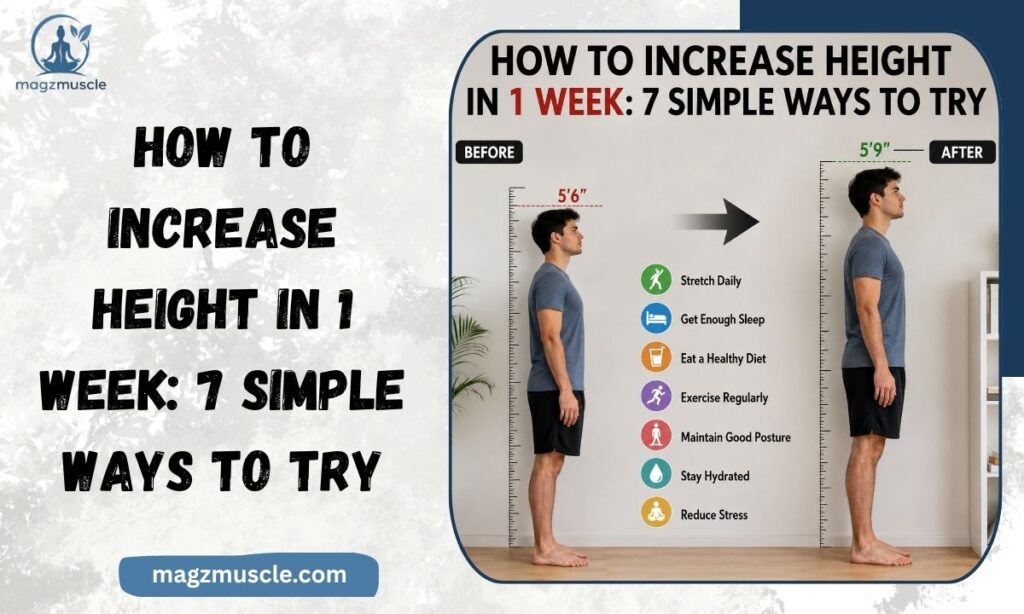

Have you been searching how to increase height in 1 week because you want to feel taller quickly? You may see terms like 1 week height increase exercise, exercise to increase height in 1 week, how to increase height in one week, and how to height increase in 1 week online, but the truth is that natural height cannot usually change significantly in just seven days.
This guide will explain what you can realistically expect from how to increase height in 1 week searches. You’ll learn about healthy habits, posture, stretching, sleep, and exercise that can support your overall growth and help you stand taller with better posture.
How to Increase Height in 1 Week
A full seven-day plan works best when it’s structured rather than random. Spreading the right exercises across the week lets your spine decompress, your posture reset, and your muscles loosen without overloading any single day. This approach also makes the routine easier to stick with.
Think of the week in three phases: warm up and prepare, build and stretch deeper, then hold and reinforce. Each phase has a clear focus so you’re not guessing what to do each day. The roadmap below lays out a simple way to structure it.
- Days 1 to 2, Prepare: Cat cow, wall posture stand, gentle toe touches to wake up the spine
- Days 3 to 5, Build: Add hanging, cobra pose, and standing forward folds for deeper decompression
- Days 6 to 7, Reinforce: Combine the full routine, hold posture checks throughout the day, and track visible changes
7 Benefits of Daily Height-Increasing Exercises
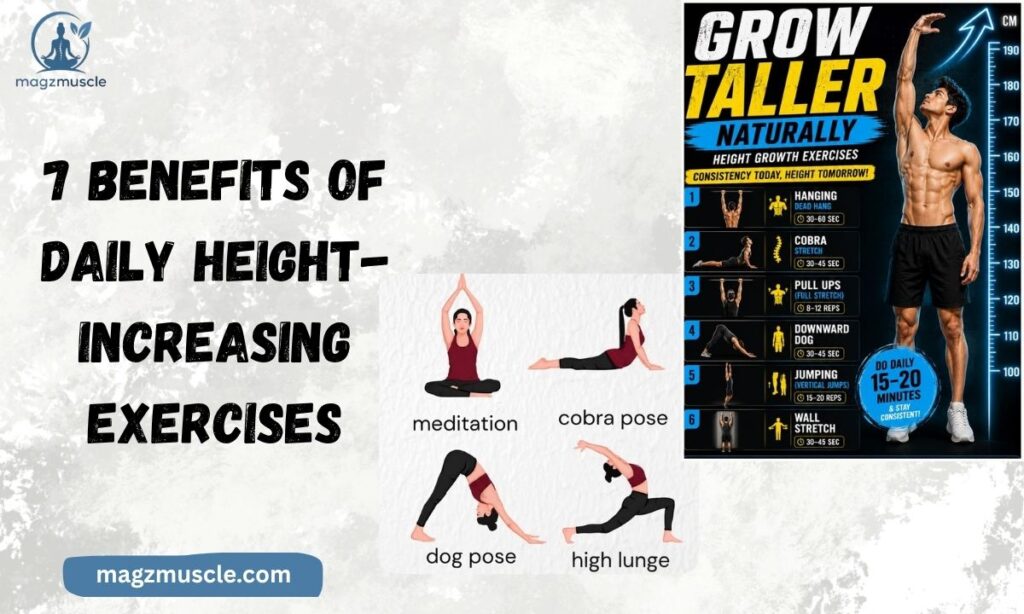
Committing to a short daily routine does more than just make you stand taller. The right combination of stretching, decompression, and posture work touches your spine, muscles, sleep, and even confidence. These benefits build on each other the longer you stay consistent.
Some effects show up almost immediately, like straighter posture, while others take a few weeks of steady practice, like stronger spinal muscles. Either way, none of these benefits require intense workouts or long sessions to start noticing a difference. Here’s what a daily routine can offer.
- Visible posture improvement and spinal decompression within the first week
- Reduced back pain, better sleep quality, and stronger core support over time
- Long-term benefits like improved confidence, body awareness, and healthier growth hormone production
Visible Height Gain through Better Posture (Within 7 Days)
Slouching compresses the spine and rounds the shoulders, which can shave off up to two inches from your true height. Straightening your posture through targeted stretches can make that height visible again within days, not months.
Spinal Decompression That Restores Natural Height
Gravity compresses the discs between your vertebrae throughout the day. Hanging and gentle traction exercises create space between those discs, temporarily restoring the natural length of your spine.
Maximised Growth During Adolescence (For Those Under 18)
If your growth plates are still open, regular stretching, good sleep, and proper nutrition support your body’s natural growth process during this window. This is the only group for whom actual bone growth from lifestyle habits is realistic.
Stronger Spine and Better Long-Term Posture
Daily mobility work strengthens the small stabilizing muscles around your spine, making it easier to hold an upright position without conscious effort over time.
Reduced Back Pain and Better Spinal Health
Many height exercises double as therapeutic stretches for the lower back. Improved spinal mobility often reduces stiffness and chronic discomfort caused by sitting for long hours.
Improved Confidence and Body Awareness
Standing taller changes how you carry yourself. People who practice postural exercises regularly often report feeling more confident and aware of their body in everyday movement.
Better Sleep Quality and Growth Hormone Production
Growth hormone is released in the deepest stages of sleep. Stretching before bed relaxes the nervous system, which can improve sleep quality and, in turn, support the body’s natural hormone cycle.
How to Get Started with Height-Increasing Exercises
Starting a height-increasing routine doesn’t require special equipment or a complicated plan. A few basics, realistic expectations, and a willingness to begin slowly are all you really need. Most people overthink this step when the actual setup takes only a few minutes to organize.
The key is easing in rather than jumping straight into intense stretches or long hangs on day one. Your muscles and ligaments need a couple of days to adapt before deeper work is safe and effective. The table below breaks the first steps into a simple, three-part starting checklist.
| Step | What It Involves | Why It Matters |
| Gather basics | Yoga mat, pull-up bar, comfortable clothing | Removes friction so you actually start |
| Set realistic goals | Focus on posture and decompression, not inches | Keeps the routine sustainable |
| Start with the basics | Gentle stretches for the first 2 to 3 days | Prepares muscles before hanging or deep stretches |
What You Need to Begin
You don’t need a gym membership. A yoga mat, a sturdy pull-up bar or door frame bar, comfortable clothing, and about 20 minutes a day are enough to get started.
Setting Realistic Goals
Aim for better posture, visible spinal decompression, and improved flexibility rather than a specific number of inches. This keeps your routine sustainable and prevents disappointment.
Start with the Basics
Begin with gentle stretches for the first two or three days before adding hanging exercises. This allows your muscles and ligaments to adapt gradually and reduces the risk of strain.
Best Exercises to Increase Height
The exercises below aren’t random stretches pulled from a workout app. Each one targets a specific part of the body, the spine, hamstrings, hips, or posture, that directly affects how tall you look and how well your spine can decompress. Done in the right order, they build on each other rather than working against each other.
Start with the gentler movements to warm up your spine, then move into hanging and deeper stretches once your muscles are ready. Hold times and rep counts matter here, going too fast or skipping holds reduces the effect almost entirely. Follow the sequence below daily for the best results.
Hanging from a Bar — Spinal Decompression — Hold 30 to 60 Seconds x 3 Rounds
Grip a horizontal bar with both hands, shoulder width apart, and let your body hang freely with your feet off the ground. This stretches the vertebrae and relieves compression built up from standing and sitting all day.
Standing Forward Fold (Uttanasana) — Hamstrings, Spine — Hold 60 Seconds x 2 Rounds
Stand with feet hip width apart, hinge at the waist, and let your upper body fold down toward your legs. Keep a slight bend in the knees if needed. This lengthens the hamstrings and the entire posterior chain along the spine.
Cobra Pose (Bhujangasana) — Spinal Extension, Anterior Chain — Hold 30 Seconds x 3 Rounds
Lie face down with palms under your shoulders. Press through your hands and lift your chest while keeping your hips on the mat. This opens the chest and stretches the front of the spine, counteracting a hunched posture.
Cat Cow (Marjaryasana Bitilasana) — Full Spine Mobility — 10 Cycles
On all fours, alternate between arching your back toward the ceiling and dipping it toward the floor. This gentle, rhythmic movement mobilizes every segment of the spine and is a great warm up before deeper stretches.
Wall Posture Stand — Postural Retraining — Hold 2 Minutes Daily
Stand with your heels, hips, shoulders, and head touching a wall. Hold this alignment for two minutes to retrain your body to recognize what a straight, tall posture actually feels like.
Toe Touches with Held Stretch — Hamstrings, Calves, Lower Back — Hold 30 to 45 Seconds x 3 Rounds
Stand tall, then bend forward from the hips and reach for your toes, keeping your legs as straight as comfortable. This targets tight hamstrings and calves, which often pull the pelvis out of alignment and affect posture.
Bridge Pose (Setu Bandhasana) — Glutes, Hamstrings, Hip Flexors — Hold 30 Seconds x 3 Rounds
Lie on your back with knees bent and feet flat on the floor. Lift your hips toward the ceiling, squeezing your glutes at the top. This strengthens the posterior chain and opens tight hip flexors caused by prolonged sitting.
Common Mistakes to Avoid

Even a simple, low-risk routine can fail to deliver results if it’s approached the wrong way. Most setbacks come from unrealistic expectations or rushed technique rather than the exercises themselves. Avoiding these common mistakes makes the difference between visible progress and frustration.
- Expecting several inches of growth in a week instead of realistic posture and decompression gains
- Using momentum or rushing through hangs and stretches instead of slow, controlled movement
- Skipping a proper warm-up before deep stretches, which increases the risk of strain
- Practicing inconsistently instead of committing to a daily routine over several weeks
- Ignoring pain or discomfort signals, especially in the wrists, shoulders, or lower back
Believing You Can Grow Several Inches in 1 Week
This is the single biggest misconception. Actual bone growth takes years and depends heavily on genetics, nutrition, and age. What you can achieve in a week is improved posture and spinal decompression, not new bone length.
Poor Form During Hanging or Stretching
Rushing through movements or using momentum instead of control increases the risk of strain, especially in the shoulders and lower back. Slow, controlled movement is far more effective and safer.
Skipping Warm-Up Before Deep Stretches
Jumping straight into deep stretches without warming up the muscles can lead to unnecessary tightness or minor injury. A few minutes of light movement before your routine goes a long way.
Inconsistency
Doing the routine once or twice and expecting visible change is unrealistic. Posture and flexibility improvements come from daily repetition over weeks, not isolated sessions.
Who Should Try Height-Increasing Exercises?
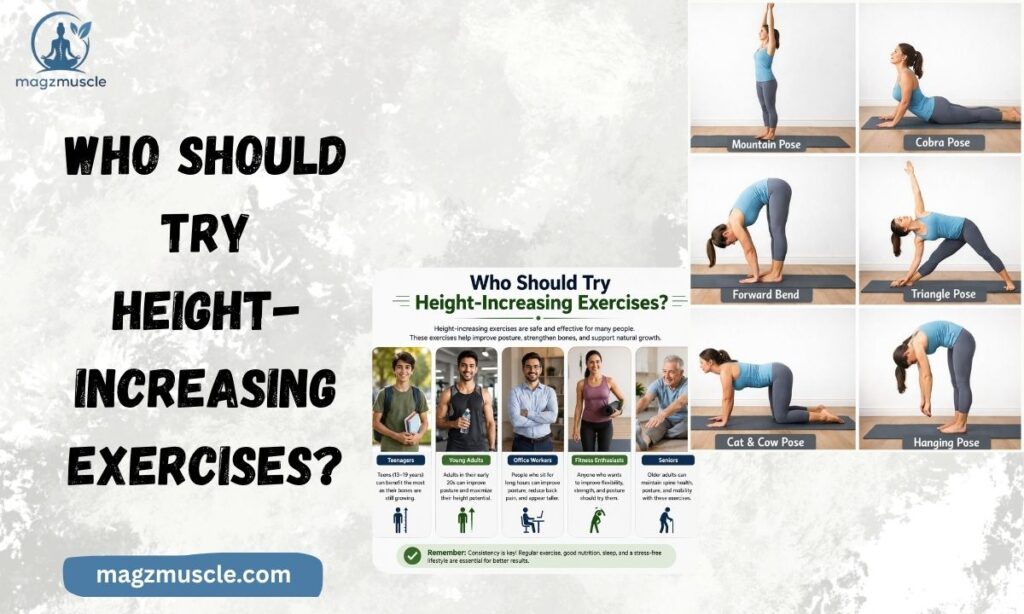
Height-increasing exercises aren’t just for teenagers hoping to grow taller. The benefits shift depending on age and lifestyle, but almost everyone can gain something from better posture and a more mobile spine. Knowing which group you fall into helps you set the right expectations before you start.
Teenagers get the closest thing to real bone growth support, while adults mostly recover height lost to habits like slouching or sitting too long. Either way, the exercises are low risk and easy to fit into a daily routine. The table below breaks down who benefits and how.
| Who | Primary Benefit | Best Focus |
| Teenagers and young adults under 18 | Supports natural growth while plates are still open | Consistent stretching, sleep, nutrition |
| Adults over 18 | Recovers height lost to poor posture | Spinal decompression, hanging |
| Office workers and sedentary adults | Counters tight hips and rounded shoulders | Daily posture breaks, hip flexor stretches |
| Older adults | Slows future height loss | Gentle mobility, spinal care |
Teenagers and Young Adults Under 18
This group benefits the most, since growth plates are typically still active. Combined with proper sleep and nutrition, these exercises support the body’s natural growth process.
Adults over 18 Wanting to Maximise Existing Height
While bone growth has stopped, adults can still recover the one to two inches often lost to poor posture, tight muscles, and spinal compression.
Office Workers and Sedentary Adults
Long hours of sitting shorten hip flexors and round the shoulders. Daily stretching counters these effects and helps maintain a taller, more open posture throughout the day.
Older Adults Wanting to Prevent Future Height Loss
Height naturally decreases with age as spinal discs lose fluid and density. Gentle mobility work and posture training can help slow this gradual loss.
Build Better Posture and Real Height Gains with a Routine That Actually Works

Growing several inches in a single week isn’t realistic for anyone past adolescence, no matter what a headline promises. What is realistic is reclaiming the height you’ve quietly lost to slouching, tight hips, and a compressed spine. That difference alone can be one to two visible inches, and it starts showing within days of consistent effort.
The exercises in this guide work because they target the real, correctable causes of “lost” height rather than chasing bone growth that has already stopped. Stick with hanging, stretching, and posture drills daily, and your body adapts faster than you’d expect. The seven-day mark isn’t a finish line, it’s just proof the routine is working.
- Prioritize daily consistency over intensity, five minutes done every day beats one long session done once
- Pair stretching with posture awareness throughout the day, not just during your workout window
- Track progress with a wall check or photo, since posture gains are often easier to see than to feel
Frequently Asked Questions
Is 5’7″ short for a 16 year old?
No, 5’7″ can be a normal height at 16, as height varies widely based on genetics and puberty timing.
Can I grow 7 inches after 17?
A seven-inch increase after 17 is uncommon. Growth depends mainly on genetics, puberty timing, and whether growth plates remain open.
What vitamins affect height?
Vitamin D, calcium, and other nutrients support healthy bones, but no vitamin can guarantee extra height beyond genetic potential.
How can I get 5 inches taller?
There is no safe method to add five inches quickly. Healthy nutrition, sleep, exercise, and good posture support normal growth.
How tall will I be if I’m 5’3″ at 12?
It is impossible to predict precisely from age and height alone. Genetics, puberty, and family heights all influence adult height.
Can I grow from 5’7″ to 6’0″?
Growing from 5’7″ to 6’0″ may be possible during ongoing puberty, but it depends on genetics and growth plates.
Conclusion
Learning how to increase height in 1 week can feel exciting, but real height growth does not happen quickly. There is no proven 1 week height increase exercise that can add several inches in seven days. Searches for exercise to increase height in 1 week, how to increase height in one week, and how to height increase in 1 week often create unrealistic expectations. Still, healthy habits can support normal growth and better posture.
If you are wondering how to increase height in 1 week, focus on sleep, balanced meals, regular activity, and good posture. Stretching may help you stand straighter and feel more flexible. Keep your goals realistic and give your body time. Understanding how to increase height in 1 week means focusing on healthy growth, not quick promises or unsafe methods.